Finding a high-potential Amazon product is not about luck. It is about using a repeatable research system to spot real demand, filter out crowded markets, and avoid beginner traps. In this guide, you will learn a step-by-step workflow you can run in SellerSprite or a comparable research setup, along with real product examples with ASINs so you can validate the process yourself.
Key Takeaways
- Start with filters: Define clear demand, price, and competition thresholds before you look at product ideas.
- Validate with multiple signals: Search demand, review pain points, and listing quality together reduce false positives.
- Quantify profit early: A product that looks exciting can still fail if fees, shipping, and returns eat into margins.
- Use structured decision rules: A simple go/no-go framework prevents emotional decision-making and saves money.
- Document everything: A lightweight template helps you compare ideas objectively and move faster.
Table of Contents
What is a high-potential Amazon product?
A high-potential product is one that has consistent buyer demand, manageable competition, and enough pricing power to maintain profit after all fees and costs. It also fits your operational reality, meaning it is not overly fragile, not heavily regulated for a new seller, and not likely to trigger frequent returns.
Quick definition you can reuse
A high-potential Amazon product is a niche item that solves a clear customer problem, shows stable search demand, has room for differentiation, and can deliver a healthy net margin after FBA fees, shipping, ads, and returns.
Step 1: Set your filters
Conclusion: Start with constraints. Filters prevent you from wasting hours on products that will never work financially.
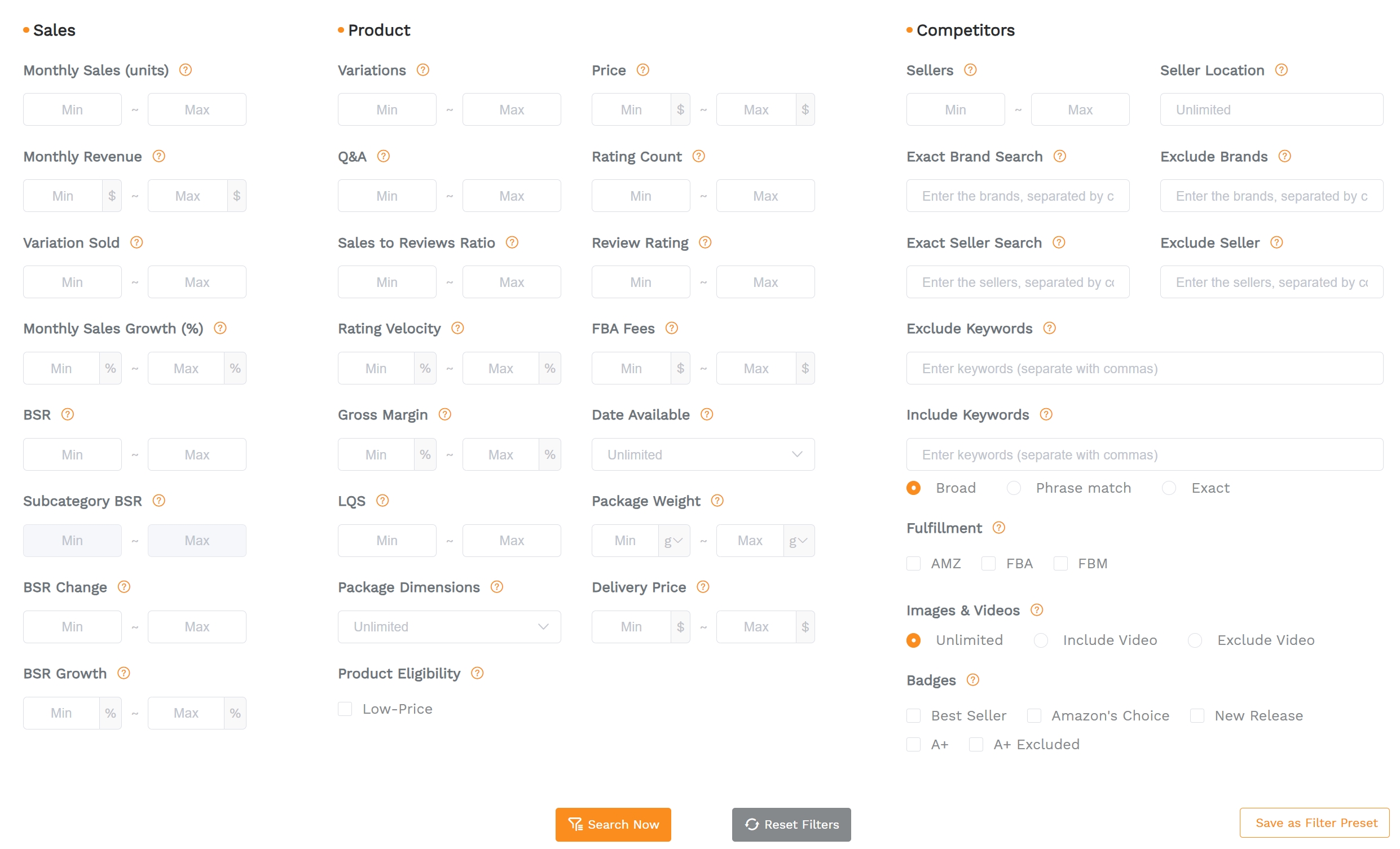
- Demand threshold: Set a minimum monthly search volume or a minimum monthly sales estimate.
- Price range: Choose a range that supports your profit margin after fees and ads.
- Rating ceiling: Cap the rating count to avoid fighting deeply entrenched listings.
- Shipping sanity check: Prefer standard-size, lightweight items if you are a newer seller.
- Risk filter: Exclude categories or problematic keywords that are commonly gated, hazmat, or highly regulated if you are just starting.
- Tool options: You can set these filters in SellerSprite. If you are working manually, record each filter as columns in a spreadsheet so you stay consistent.
- Tip: Do not over-tighten filters on day one. Start broad, then narrow as you learn what the market is showing you.
Step 2: Scan and shortlist
Conclusion: Shortlist products that look unusual, problem-solving, and underserved, then validate them further in the next step.
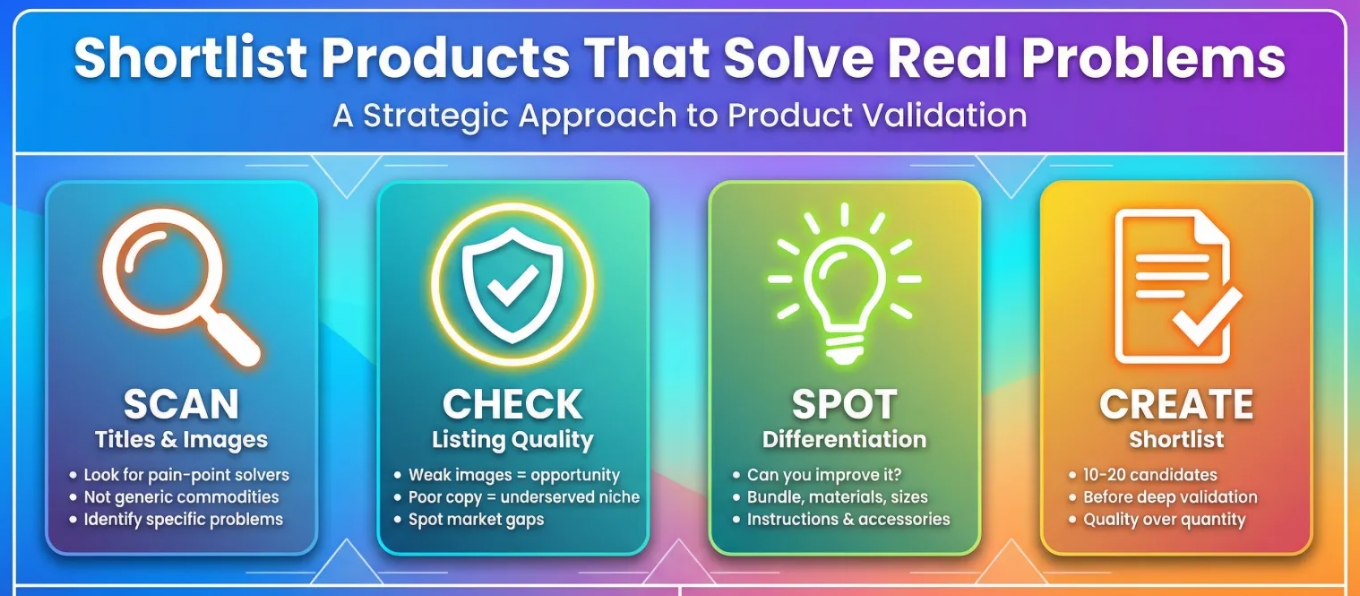
- Scan titles and images: Look for products that clearly solve a specific pain point, not generic commodities.
- Check listing quality: Weak images and poor copy can be a signal that a niche is underserved.
- Spot differentiation: Ask what you can improve: bundle, material, size variation, instructions, accessories.
- Create a shortlist: Keep 10-20 candidates before you start deep validation.
- Common mistake: Falling in love with a product before you run the numbers.
- Motivation: Shortlisting is progress. Your goal is momentum, not perfection.
Step 3: Verify demand and competition
Conclusion: Demand is real when customers search for it, and reviews show repeated, specific use cases.
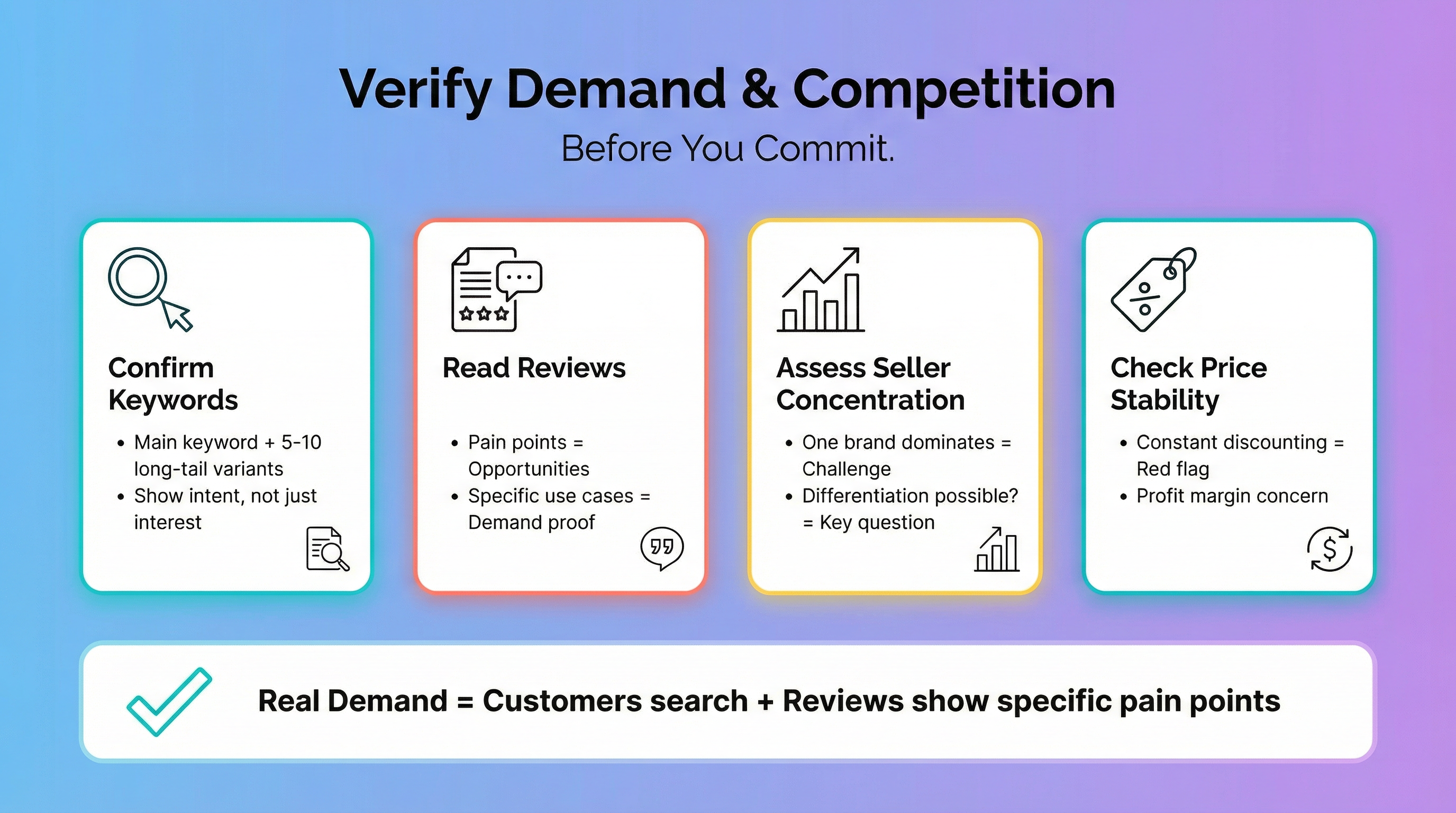
- Confirm keywords: Identify the main keyword and 5-10 long-tail keywords that indicate intent.
- Read reviews for pain points: Look for repeated complaints you can fix with better design or better instructions.
- Assess seller concentration: If one brand dominates, consider whether differentiation is realistic.
- Check price stability: A niche with constant discounting can be hard to profit from.
- Tool options: SellerSprite Review Analysis can speed up theme extraction.
- Tip: Spend extra time on 1-star to 3-star reviews. That is where the opportunity usually lives.
Step 4: Profitability and risk check
Conclusion: A good product is not a good product if net margin collapses after fees, shipping, ads, and returns.
Profit quick check
| Sale price | Target: $20 to $60 for many new sellers |
| FBA fee plus referral fee | Estimate early, then confirm with fee calculators |
| Landed cost | Product cost plus shipping plus packaging plus inspections |
| Ads and returns buffer | Add a conservative buffer so you do not get surprised |
| Net margin | Aim for 15 percent or more when possible |
- Estimate fees: Use an FBA fee estimate and include a realistic referral fee.
- Estimate landed cost: Include freight, duties, labeling, and prep.
- Plan a margin buffer: Build in room for PPC, coupons, and returns.
- Risk flags: Hazmat, meltables, ingestibles, or regulated claims can add time and cost.
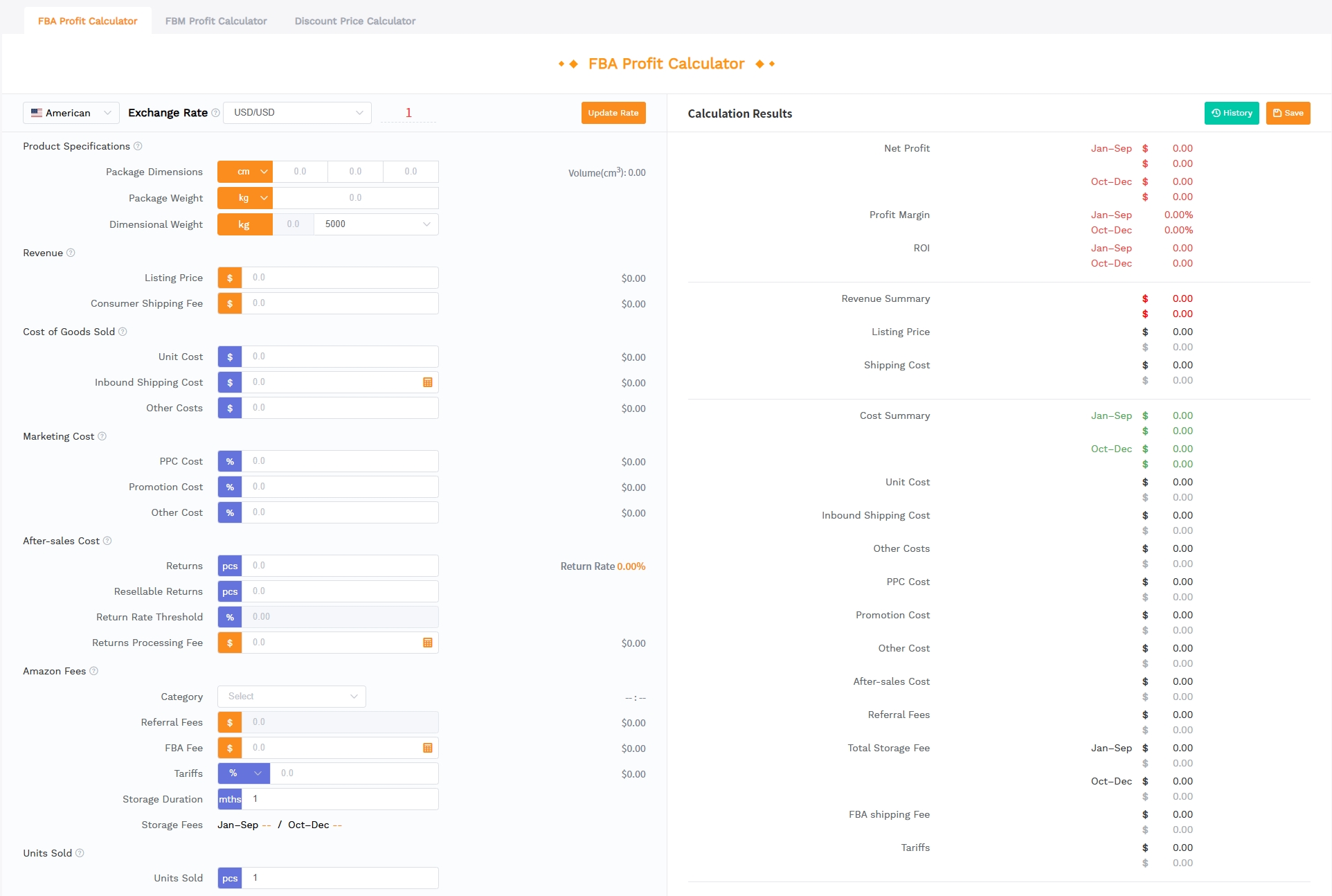
• Tool options: You can leverage SellerSprite's free tool Profitability Calculator to help you estimate your profit.
Real case examples with a repeatable format
Below are five real product types you can research today. The product names and ASINs are real, so you can verify them. Metrics should be checked when you publish, as Amazon listings change frequently. If you use SellerSprite, drop each ASIN into your workflow to capture updated price, review count, and demand metrics.
Example 1: Adjustable Car Door Latch Step
Real ASIN to verify: B09QHHSTP9
How to evaluate this niche
- Demand signal: Seasonal but recurring use cases, such as roof racks, kayaks, and cargo.
- Competition signal: Many similar items, so differentiation must be clear: safer grip, better rubber protection, clearer installation instructions.
- Risk level: Medium. Physical safety and weight claims require careful quality control.
SellerSprite workflow tip: Use Review Analysis to find repeated complaints, such as slipping, scratching door frames, or weak hinges, then design your version to solve one specific complaint.
Example 2: Lift Harness for Dogs With Mobility Issues
Real ASIN to verify: B08H8LT7JY
How to evaluate this niche
- Demand signal: Aging pets and post-surgery support products have stable demand.
- Competition signal: Variations matter: size range, comfort padding, washable materials.
- Risk level: Medium. Fit issues can increase returns, so sizing guidance is critical.
SellerSprite workflow tip: In competitor reviews, extract the most common sizing complaints and build a sizing chart that answers those exact issues.
Example 3: UV Sterilizer Light for Aquariums
Real ASIN to verify: B07V26V5MS
How to evaluate this niche
- Demand signal: Clear, niche pain point: algae control and water clarity.
- Competition signal: Moderate. Buyers value reliability and clear installation guidance.
- Risk level: Medium to high. Electronics and safety claims require quality control and safer packaging.
SellerSprite workflow tip: Use Keyword Mining tool to find long-tail terms like "algae control" and "fish tank water clarity," then validate the exact wording in reviews for listing copy.
Example 4: Plantar Fasciitis Night Support Sock
Real ASIN to verify: B00SSBP33C
How to evaluate this niche
- Demand signal: Large market, strong search volume, many repeat buyers.
- Competition signal: High. You need a clearer angle: comfort, breathability, better fit guidance.
- Risk level: Medium. Comfort and fit drive returns, and medical claims require careful wording.
SellerSprite workflow tip: Review themes often include comfort at night and slipping. Solve one of those and show it visually in images and A+ content.
Example 5: Collapsible Water Bowl for Pets
Real ASIN to verify: B0C1RH2K82
How to evaluate this niche
- Demand signal: Stable, broad pet travel use case.
- Competition signal: High commodity risk. You need differentiation: a better clip, better silicone, and a bundle with a bottle.
- Risk level: Low. Simple product, but you must win on branding and bundles.
SellerSprite workflow tip: If a niche looks commoditized, use keyword analysis to find a smaller segment like hiking dog accessories, then tailor your listing and bundle to that segment.
FAQs
Q1: What is a good competition level for a new seller?
A: Look for niches where top listings are not untouchable. As a starting point, aim for moderate review counts, clear differentiation opportunities, and no single brand controlling most of the first page. If you can identify a specific complaint you can fix, competition becomes less scary.
Q2: How do I estimate monthly sales without guessing?
A: Use multiple signals. Combine keyword demand, competitor review velocity, and sales estimates from a research tool (such as SellerSprite's Sales Estimator). If you are manual, track the best-seller rank over several days and compare it with similar products. Do not rely on a single data point.
Q3: When should I skip a product even if demand looks strong?
A: Skip when the margin is thin, returns are likely, or the risk is high for your experience level. Regulated categories, fragile items, and products with safety claims can add hidden costs and time that can break your first launch.
Share Your Sourcing Journey With SellerSprite Community
Join the SellerSprite community on the Facebook Group to share your sourcing journey, ask questions, and get support from fellow Amazon sellers.
Join SellerSprite Facebook Group
Prefer Discord? Join here: SellerSprite Discord
View The SellerSprite Course Directory
Ready for the next step? Open the SellerSprite Academy course directory to continue building your Amazon FBA skills chapter by chapter.
About the author
The SellerSprite Team is composed of experienced Amazon sellers, e-commerce experts, and data analysts dedicated to helping sellers succeed on Amazon. We share proven strategies, innovative tactics, and up-to-date insights through the SellerSprite course and blog. Our mission is to empower Amazon entrepreneurs with knowledge and tools to grow their businesses.