TL;DR: Promoting Amazon Merch on Demand listings effectively blends Amazon SEO, strategic external traffic, and audience-specific content to boost visibility and sales. This guide shows you exactly how.
Key Takeaways
- Optimizing your listing's metadata is the foundation of all promotion.
- External traffic works best when it's highly relevant and targeted.
- Tracking performance and adjusting based on data ensures long-term success.
Table of Contents
Note on marketplaces: This guide is specifically optimized for the US market.
Quick Answer
Many sellers assume that uploading a design to Amazon Merch is enough, but success demands proactive promotion. The quick answer: your promotion efforts must start with a fully optimized listing that Amazon's algorithm can understand, and then you need to funnel in external traffic that matches the buyer intent for that niche. By combining Amazon search visibility with targeted traffic from social media, influencers, and niche communities, you can dramatically increase your sales. This approach isn't about spending more money; it's about being smarter with how you present your designs and where you attract buyers.
Merch promotion starts with searchable metadata and audience-specific traffic
The foundation is your listing's metadata, including title, bullet points, description, and backend keywords. These elements tell Amazon what your product is and when to show it in search results. Without clear, keyword-rich metadata, even the best designs remain invisible. Once that's in place, external promotion amplifies reach. But here's the key: traffic must be audience-specific. Sending random visitors who aren't interested in your T-shirt niche will only drag down your conversion rate, harming your organic ranking. So every channel you use, from TikTok to Facebook groups, should target people already in the market for your type of design. Let's dive deeper.
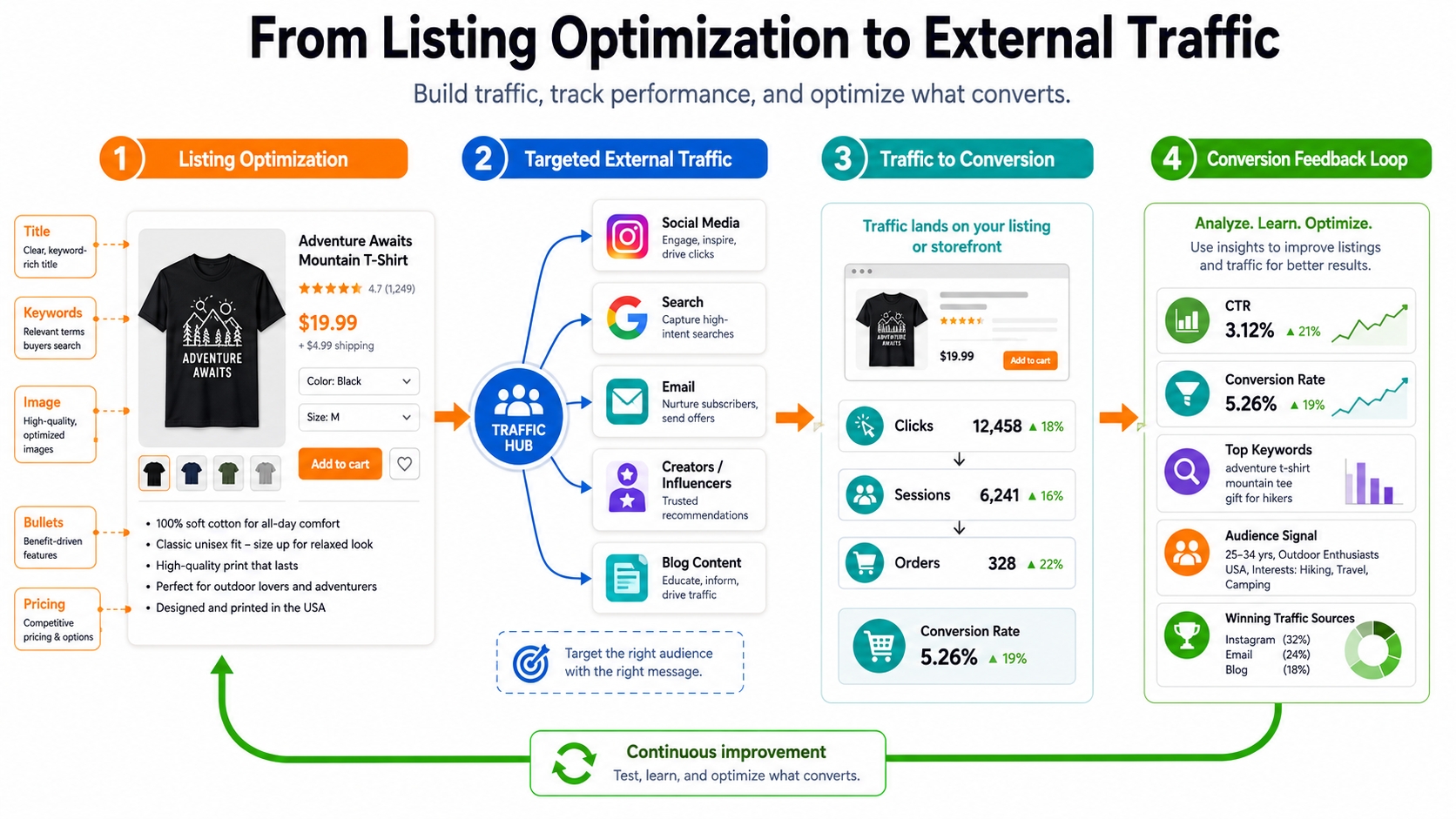
Promotion Channels for Amazon Merch
You have a multitude of promotion channels at your disposal, each with unique advantages. The goal is to build a diversified strategy that doesn't rely on a single source of traffic. Here are the main channels to consider, from Amazon itself to external platforms.
Amazon Search
Amazon is the largest product search engine, and the most direct way to promote your Merch items is to rank for relevant keywords. This starts with thorough keyword research to identify terms with high demand and manageable competition. Optimize your title, bullets, and back-end search terms with those keywords, but always keep the listing readable. Use images that show your design in context, and leverage the brand name as a ranking factor. Internal advertising through Sponsored Products can also boost visibility, but organic ranking is your long-term asset. For a deep dive on Amazon keyword research, see our Amazon merch keyword research guide.
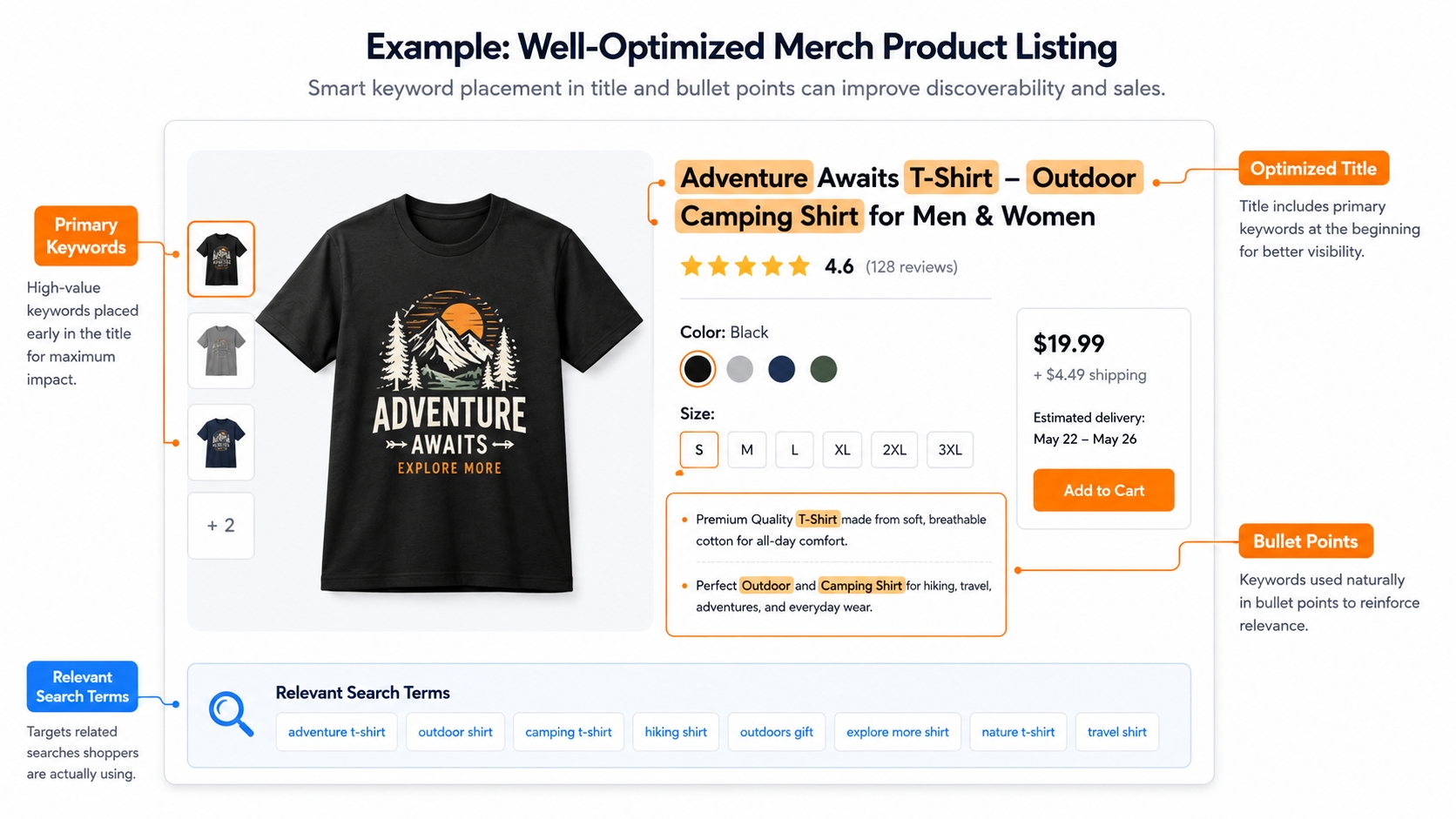
Optimization Checklist:
- Title includes primary keyword naturally
- Bullet points highlight design features and use cases
- Back-end search terms filled with relevant long-tail keywords
- Product type correctly chosen (e.g., T-shirt, hoodie)
- Multiple high-quality lifestyle images provided
Social Media
Social platforms like Instagram, Pinterest, TikTok, and Facebook are goldmines for visual products like apparel. Create posts that showcase your designs in lifestyle settings, such as people wearing your shirts, matching accessories, or themed flat lays. Use relevant hashtags to reach new audiences, and engage with followers through stories, polls, and user-generated content campaigns. Pinterest particularly excels for long-term discovery, as pins can go viral months later. TikTok's short video format is perfect for design reveals and behind-the-scenes content. The key is consistency and authenticity: build a brand identity that resonates, and slowly convert followers into customers.
Influencer Content
Partnering with micro-influencers or content creators in your niche can bring your designs to a highly engaged audience. Instead of chasing celebrities, find influencers with 1k–50k followers who align with your design's theme—be it fitness, gaming, or pet lovers. Offer them a free sample or a commission for promoting your Merch. Authentic reviews and worn-photos build trust and drive qualified traffic. Ensure you provide a tracking link to measure success. Influencer content also generates valuable user-generated assets you can repurpose on your own social channels.
Blogs and Communities
Niche blogs, subreddits, and Facebook groups can be powerful promotion avenues. Write guest posts for blogs that cater to your target audience, mentioning your designs naturally. Participate in Reddit threads without spamming; contribute value and include a link only when relevant. Community-driven sites like etsy-style forums or Discord servers also work. The key is to be helpful, not salesy. When people trust your knowledge, they'll click your links. This approach builds lasting referral traffic and often yields better conversion than paid ads because the audience is already engaged.
Organic vs. Paid Traffic Tradeoffs
Organic traffic from search and social takes time to build but is cost-effective and self-sustaining. Paid traffic, like Facebook ads or Amazon PPC, offers immediate visibility but requires budget and continuous optimization. For new Merch sellers, starting with organic through SEO and community building is advisable. As you scale, layer in paid advertising to accelerate top-performing listings. A hybrid approach often works best: Use organic efforts to validate demand and gather data, then amplify winners with paid campaigns.
| Factor | Organic Traffic | Paid Traffic |
|---|---|---|
| Cost | Time investment, low monetary cost | Budget required per click/impression |
| Speed | Slow to build, long-term payoff | Immediate results |
| Sustainability | Compounds over time, traffic continues | Stops when budget ends |
| Targeting | Broad, based on content relevance | Precise audience targeting |
| Effort | Continuous content creation | Campaign management and A/B testing |
Listing Optimization Before Promotion
Before you drive any external traffic, your Merch listing must be fully optimized to convert visitors into buyers. A poorly optimized listing wastes the traffic you bring in and can even hurt your long-term rankings. Focus on these four critical areas.
Title Clarity
Your title is the first thing Amazon's algorithm and shoppers see. It should be descriptive yet concise, including the main keyword, product type, and key design theme. For example, "Funny Cat Lover T-Shirt – Cute Gift for Cat Moms, Soft Unisex Fit." Avoid keyword stuffing; readability matters. A clear title improves click-through rate from search results, which in turn boosts ranking. Test different title formats over time to see which resonates best.
Design Mockups
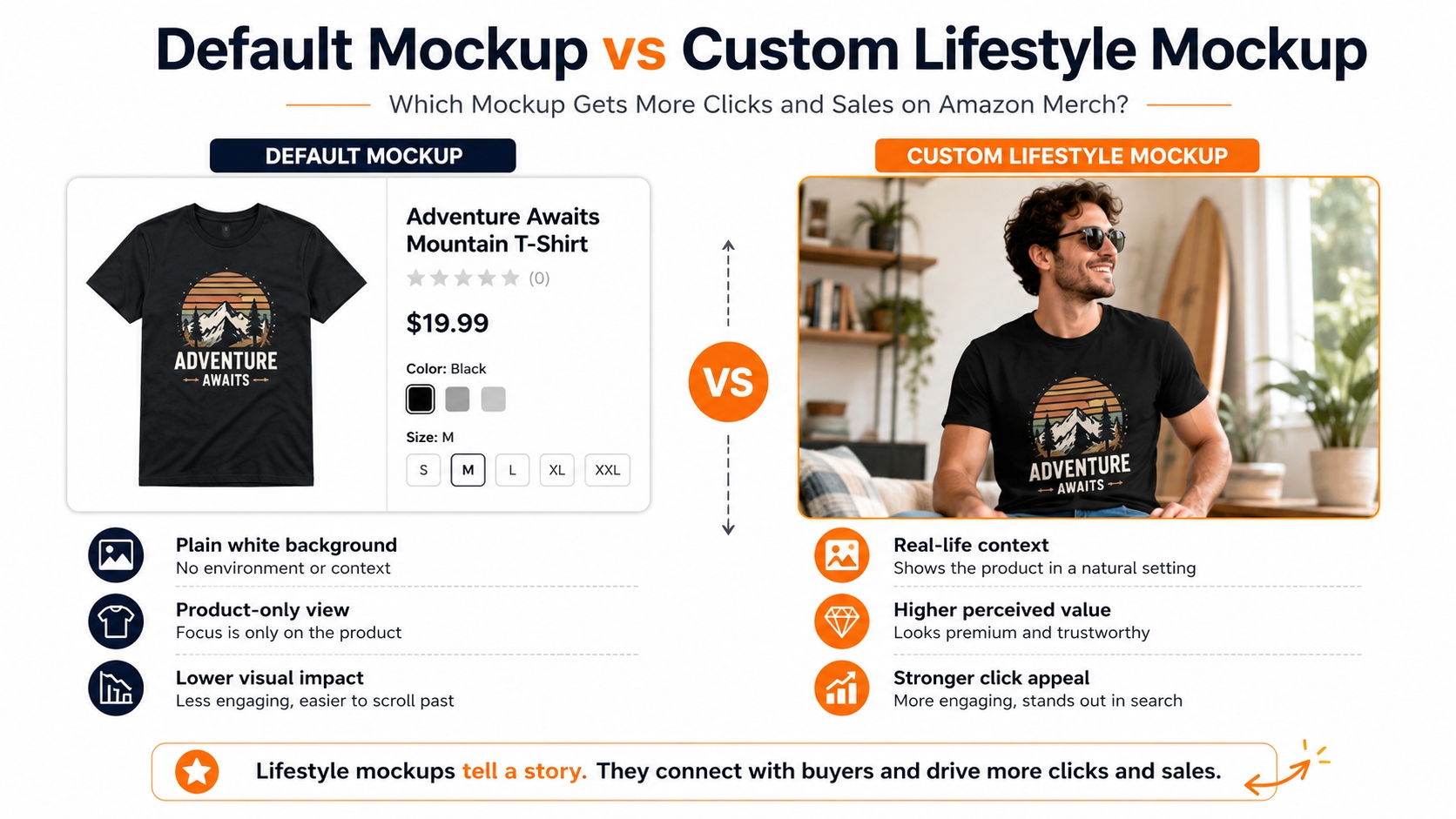
Low-quality images can kill conversions. Use high-resolution mockups that show your design on various apparel colors and styles, and in realistic settings. Lifestyle images with models wearing your shirt perform far better than flat lay alone. Include size charts and close-ups of the print quality. Each image is an opportunity to reinforce the design's value. If you can't afford professional photography, use online mockup generators, but ensure they look realistic and appealing.
Product Type Selection
Merch by Amazon offers multiple product types: T-shirts, hoodies, pop sockets, etc. Choose the product type that best matches your design's usage. A complex illustration might look better on a T-shirt than a phone case. Also, consider the search demand for that product type; T-shirts generally have more search volume, so they're a good starting point. Expand to other products once your brand gains traction. Listing a design on multiple compatible product types can increase visibility without extra design work.
Price Testing
Pricing affects both conversion and royalty. Start with a competitive price point—not too low to seem cheap, not too high to deter buyers. Amazon sets a base price, and you add your royalty. Research your niche to see what similar designs sell for. Test different prices over time; sometimes a slight increase can boost perceived value without hurting sales. Monitor your conversion rate as you adjust. Remember, you can run experiments by duplicating a listing with a different price and comparing performance.
External Traffic Workflow
Driving external traffic to your Merch listings requires a structured approach. Without a clear workflow, you risk wasting effort and budget. Follow these steps to maximize the impact of your external promotion.
Build Audience-Specific Creatives
The same creative doesn't work everywhere. A TikTok video might need to be fast-paced and trend-driven, while a Pinterest pin should be a high-quality vertical image. Tailor your visuals and messaging to each platform's audience. For example, a shirt design about "Yoga Lovers" could be promoted with a calming video on Instagram Reels, a listicle blog on health sites, and a carousel ad on Facebook. Each piece of content should highlight a different angle that appeals to that audience. Consistency in branding helps, but the delivery must fit the channel.
Use Trackable Links Where Available
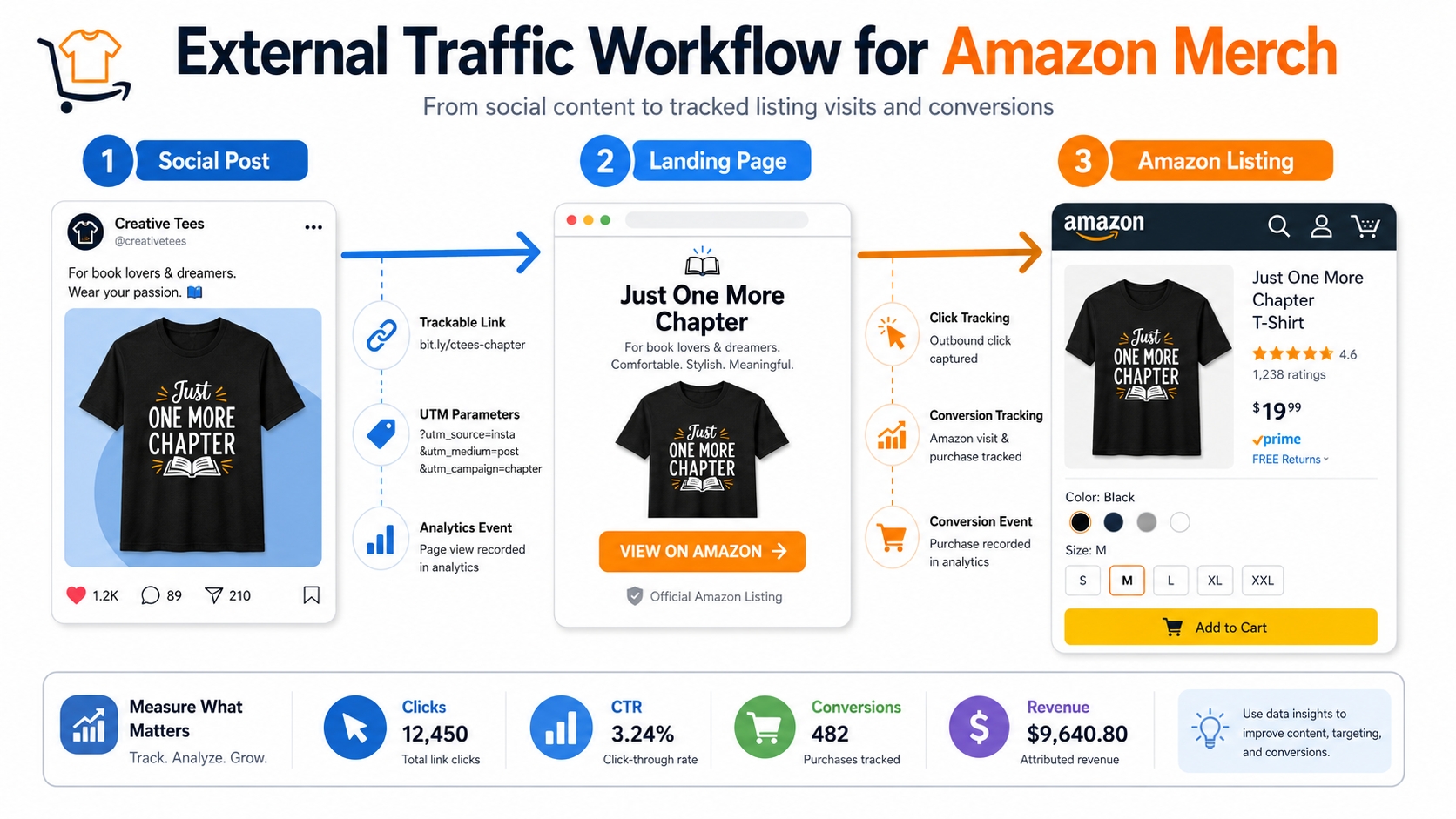
Amazon Merch does not provide a direct way to track external sources within Amazon, but you can use on-platform tools like Amazon Attribution (if eligible) to measure off-Amazon campaigns. Alternatively, create landing pages on your own site that redirect to Amazon with UTM parameters, then track engagement metrics there. For social media, use shortened links with tracking codes to see which posts drive clicks. Without tracking, you can't optimize your promotional spend.
Watch Conversion and Ranking Signals
After you start driving traffic, monitor your Merch listing's performance closely. Key metrics include sales volume, conversion rate, and BSR (Best Sellers Rank). A spike in traffic without sales can signal poor targeting. Use Amazon's Brand Analytics (if enrolled in Brand Registry) to see search terms driving your listing. Also, watch for any ranking drops; if your listing's conversion rate falls, Amazon's algorithm may demote it. Adjust your external traffic sources based on which segments convert best.
Avoid Over-Sending Irrelevant Traffic
Flooding your listing with visitors who aren't interested in your design can be worse than no traffic at all. If a high volume of clicks results in few purchases, Amazon's algorithm interprets this as poor relevance, potentially penalizing your ranking. Always prioritize targeted traffic. Before running a broad ad campaign, narrow your audience demographics and interests. It's better to send 100 highly targeted visitors than 10,000 random ones.
How SellerSprite Helps Promotion Planning
Promotion is data-driven, and SellerSprite's toolkit provides the insights you need to plan and execute effectively. Beyond just keyword research, it helps you understand the competitive landscape and time your campaigns for maximum impact. Let's look at three key ways it supports your Merch promotion.
Keyword Demand
Knowing which keywords have high search volume and low competition is crucial. SellerSprite's Keyword Research tool reveals demand for terms like "funny dad shirt" or "retro synthwave hoodie," letting you target the phrases that will actually bring traffic. It also shows seasonality, so you can plan seasonal designs ahead of time. Instead of guessing, you base your listing optimization and ad targeting on real data. This dramatically increases the chance of your listing being found. Consider our Merch on Demand promotion toolkit for a complete set of resources.
Competitor Research
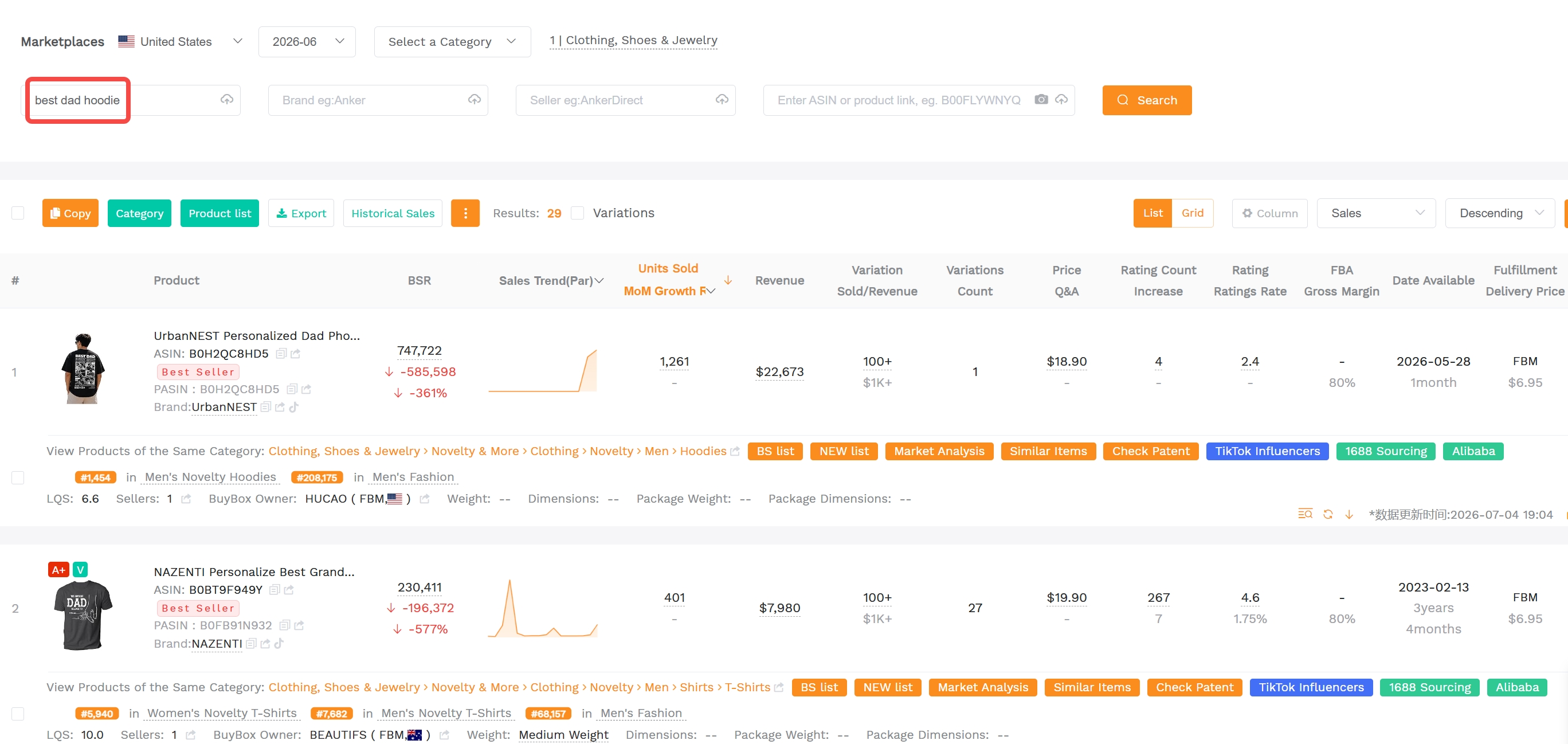
Spying on successful competitors can reveal winning promotion strategies. SellerSprite allows you to analyze top-selling Merch products: their keywords, price points, BSR history, and even their estimated sales. Use this intelligence to reverse-engineer what's working. For instance, if a competitor's shirt suddenly spikes in sales after a social media push, you can examine their external activity. This competitor insight helps you stay agile and informed.
Trend Timing
Seasonal and trend-based designs can be huge revenue drivers if promoted at the right time. SellerSprite's can help you spot rising search terms or emerging niches. For example, as summer approaches, searches for "beach vibes shirt" increase. By identifying trends early, you can upload and promote designs before the peak, capturing organic traffic. It also alerts you when a trend is fading, so you can avoid over-investing in dying markets.
Next Steps
Ready to put this into action? Start by auditing your current Merch listings using the optimization checklist above. Then, identify two external channels that align with your niche and begin building audience-specific content. As you gather data, refine your strategy using the insights from SellerSprite. And remember, none of this works without a strong foundation. If you haven't already, brush up on the fundamentals with our comprehensive Amazon Merch on Demand guide.
- Optimize your existing Amazon Merch listings following the checklist.
- Choose one social media channel and one community platform to start driving targeted traffic.
- Use SellerSprite's free trial to research keywords and spy on top competitors.
- Scale what works and continuously test new ideas.
FAQ
Can Amazon search traffic help Merch products sell?
Yes, organic search traffic is the most reliable source of sales for Merch products. When shoppers search for specific terms (e.g., "funny nurse shirt") and your listing appears, the purchase intent is high. Optimizing your listing for Amazon SEO ensures you capture this high-converting traffic without spending on ads.
What external traffic sources work for Amazon Merch?
The most effective external traffic sources include social media (Pinterest, Instagram, TikTok), influencer collaborations, niche blogs, and communities like Reddit. The key is to choose platforms where your target audience spends time and to tailor your content to each channel.
How do keywords help Amazon Merch promotion?
Keywords are the bridge between what buyers search for and your listings. By including relevant keywords in your title, bullet points, and backend search terms, you increase the likelihood of Amazon displaying your product for those queries. This is the foundation of both organic and external promotion because external traffic often starts with a search.
Can too much irrelevant traffic hurt a Merch listing?
Absolutely. If a listing receives a high volume of clicks but few purchases, Amazon's algorithm may interpret this as low relevance, which can lower your search ranking. Always prioritize targeted traffic that is likely to convert, rather than casting a wide net that damages your listing's performance metrics.
What should I track after promoting Amazon Merch listings?
Monitor sales volume, BSR (Best Sellers Rank), conversion rate, and traffic sources. If you're running external campaigns, track click-through rates and the resulting sales lift. Tools like Amazon Brand Analytics and SellerSprite can help you attribute success and optimize your efforts.
References
- Amazon Merch on Demand Resource Page View
- Amazon Merch on Demand Guide View
- Amazon Merch Keyword Research Guide View
By SellerSprite Success Team
The SellerSprite Success Team combines years of Amazon marketplace experience with data‑science expertise, helping sellers of all sizes dominate search results through proven operational strategies and cutting‑edge tooling.
Last updated: 2026-07-20