Effective Product Sourcing Strategies for Amazon FBA

2025-12-10

Welcome to Product Sourcing! In this chapter, you'll learn to find and work with suppliers so you can source high-quality, cost-effective Amazon FBA products. By now, you should have a promising product idea (with the help of SellerSprite's product research tools in earlier chapters). The next phase is sourcing that idea from a reliable manufacturer. This might seem daunting, but we'll simplify the process and show you how straightforward sourcing can be.

An image showing the Amazon FBA product sourcing process from research to launch

What to Expect in This Chapter: We'll cover an overview of the sourcing process from start to finish, including finding suppliers (often on Alibaba or similar directories), negotiating, manufacturing, and shipping your products to Amazon's warehouses. We'll examine sourcing from China versus other countries, and discuss using sourcing agents. By the end, you'll feel confident sourcing products for your business.

(Remember: If you have any questions as you go through this chapter, feel free to ask in the SellerSprite community. Join our SellerSprite Discord or the SellerSprite Facebook Group to get help from experienced sellers and our team.)

Overview of the Product Sourcing Process

An image showing the overview of product sourcing process

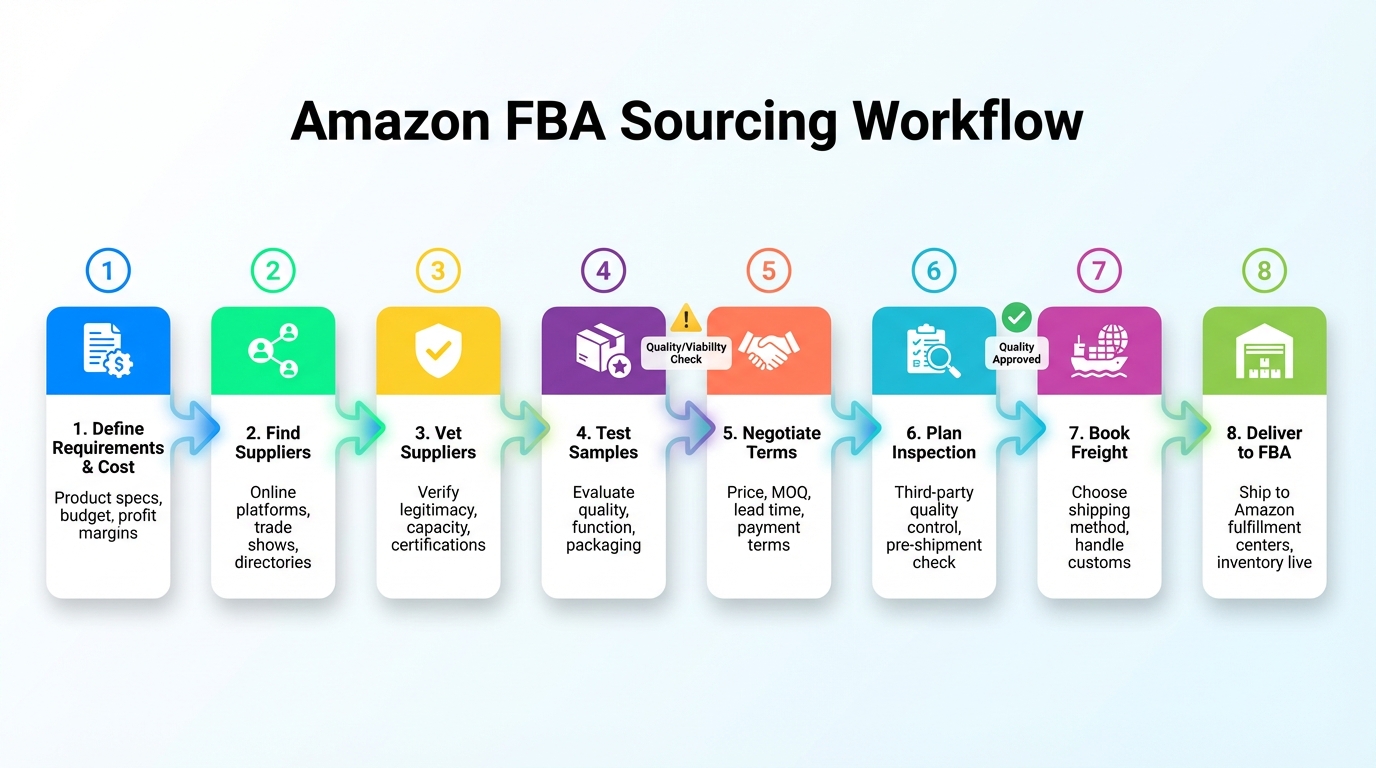
Sourcing a product for Amazon FBA involves a few manageable steps. It's normal to worry about what could go wrong, like finding a trustworthy supplier or shipping products internationally, especially if you're new to this. Fortunately, the process is simpler than it seems when broken into clear steps. Here is a simplified overview of how to go from product idea to ready inventory on Amazon:

  1. Find Potential Suppliers: Your first step is to identify manufacturers that can produce your product to the right quality and at the right cost. Typically, this involves platforms like Alibaba, the largest business-to-business sourcing platform connecting entrepreneurs with suppliers, primarily in China. On Alibaba, you can search for your product or related keywords and filter for verified suppliers. As you start this supplier search, reach out to multiple options to compare prices, communication, and capabilities. You might also visit local trade shows, search online directories, or contact domestic manufacturers. Aim to create a shortlist that meets your quality, price, and reliability requirements before progressing to the evaluation phase.
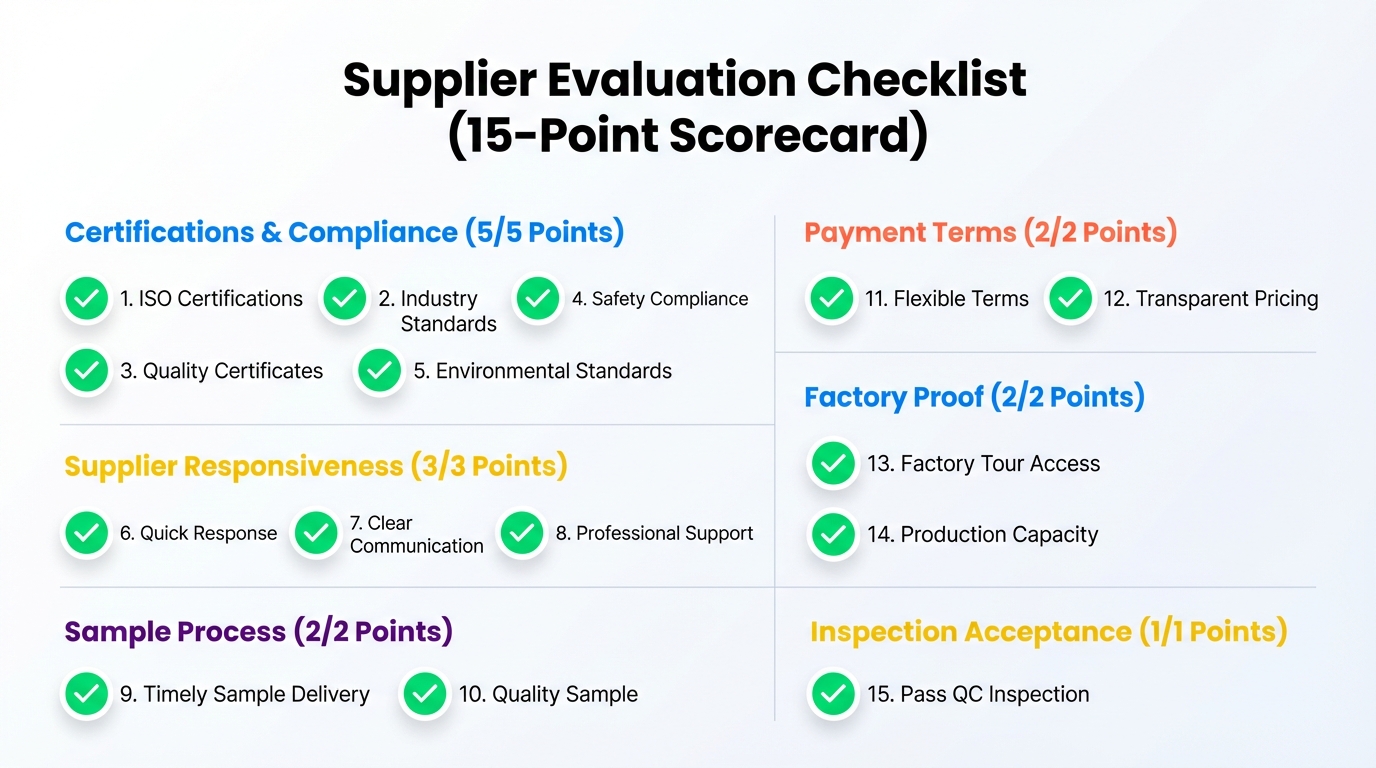
  2. Evaluate and Select the Best Supplier: With your shortlist in hand, shift your focus to evaluating which supplier best fits your requirements. Assess their responsiveness, their answers to your questions, and their ability to meet your product specs. Request product details and, ideally, samples from top choices, so you can inspect quality firsthand. During this phase, you are narrowing your options to find a supplier who offers the right blend of quality, cost, and trust. Pay extra attention to production capabilities, materials, and certifications.
  3. Negotiate Product Details and Terms: After selecting your preferred supplier, proceed to negotiate and clarify all product details. Think of this step as the bridge that ensures both you and the supplier are aligned before any production begins. Hash out details such as specifications, pricing, minimum order quantity (MOQ), timeline, payment terms, and shipping terms. Apply SellerSprite's FREE tool Profitability Calculator to confirm your numbers work for you. Remember: negotiation is expected and can be constructive. With terms set, you're ready to confirm your order and agreement.
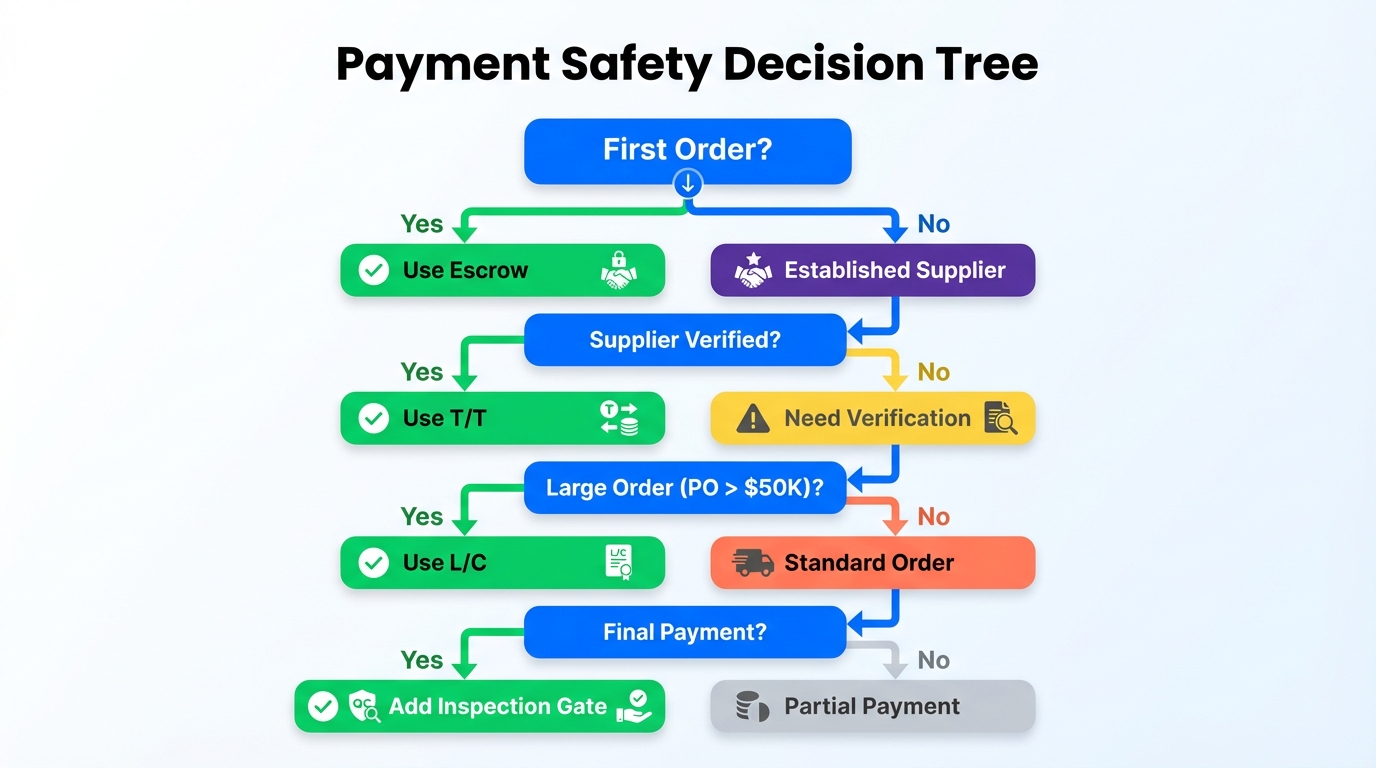
  4. Place a Trial Order and Finalize the Agreement: Once you and the supplier reach an agreement, it's time to place your order and formalize it. Start with a manageable quantity for your first batch (as low as the supplier's MOQ or what fits your budget): this trial order helps you test the market. Next, expect the supplier to require a signed purchase agreement or invoice, along with an upfront deposit (typically about 30% of the total cost) before production begins. At this stage, double-check that the contract covers all the important points, including product specs, total units, price, payment schedule, production timeline, quality standards, and procedures for defects. Ensuring everything is in writing protects both parties. Once the paperwork is completed and the deposit is paid, production of your product will begin.
  5. Production and Quality Control: With production underway, focus turns to ensuring your supplier manufactures units to the agreed specifications. Stay in touch with your supplier for updates, photos, or videos, and prepare for a product inspection near the end of the run. Whether you visit, hire an inspector, or request final samples, intercepting problems early saves future headaches. Address any issues before giving the green light for the final shipment. Successfully passing this phase, you'll be ready for payment and shipping.
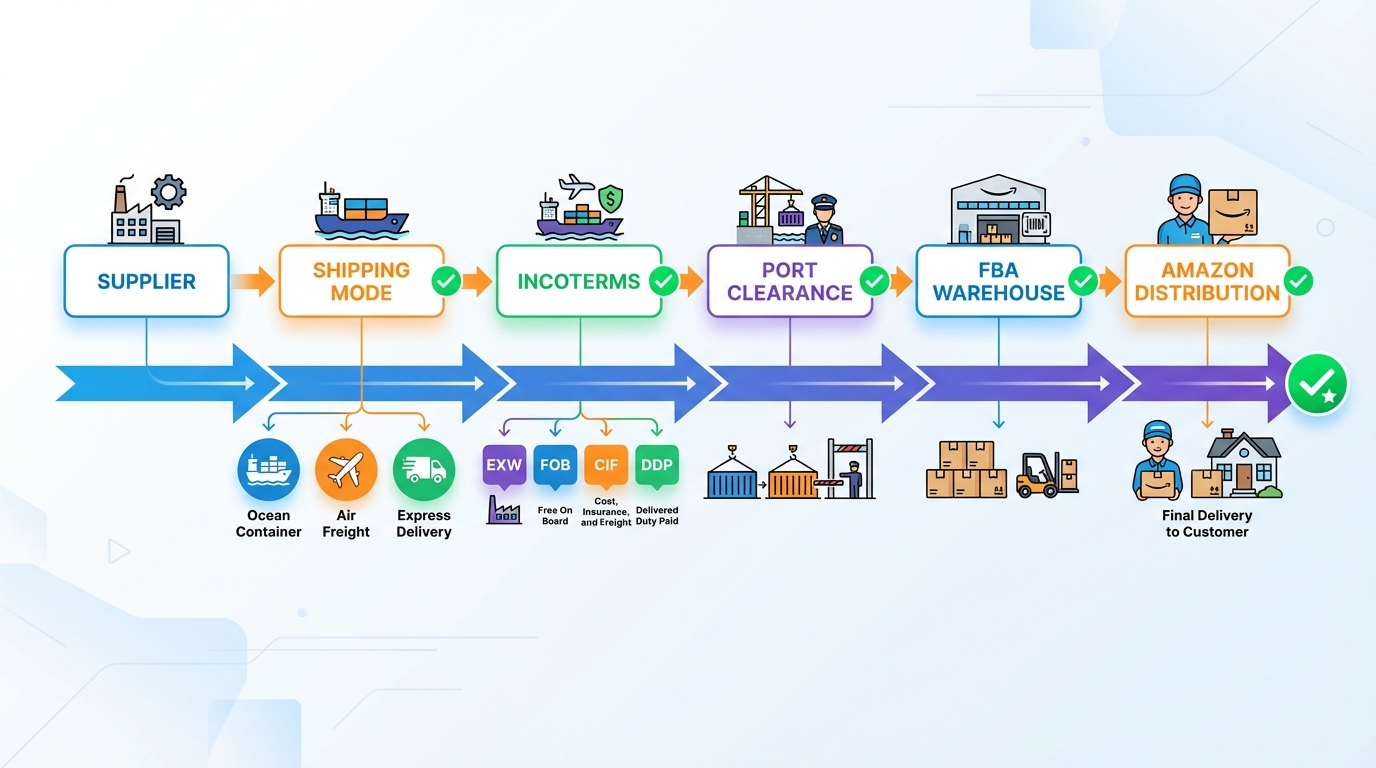
  6. Final Payment and Shipping Arrangements: After production and inspection wrap up, it's time to complete payment and coordinate shipping. Different methods (air versus sea) offer trade-offs of speed and cost. For your first shipments, you may opt for air for speed, then shift to sea for savings as your volumes grow. Your supplier or a freight forwarder can assist with logistics. If you're new to international shipping, don't worry, and we'll cover these logistics in a later chapter. Once your shipment is on its way, focus shifts to customs clearance and delivery to Amazon FBA.
  7. Customs Clearance and Delivery to Amazon FBA: Once your goods enter the destination country, customs clearance is the next step. Depending on your shipping method, couriers or freight forwarders help with this process. Ensure paperwork is in order: commercial invoice, packing list, and Amazon shipment labels. Once cleared, your products are sent to the specified Amazon FBA center, where proper labeling and packaging ensure a smooth check-in. Next, your inventory will be received by Amazon and prepared for sale.
  8. Amazon Receives Inventory, and Your Listing Goes Live: After delivery to the Amazon warehouse, staff scan and count your products, then stock them. This check-in typically takes a few days. Once units are active, your Amazon listing goes live, and sales can begin. At this stage, monitor your listing to ensure everything is correct and get ready to launch your marketing or promotional strategies, which we'll cover in upcoming chapters.

This end-to-end process, from finding a supplier to having sellable inventory at Amazon, is the backbone of any Amazon FBA business. The first time through, it can feel overwhelming, but remember that thousands of sellers have navigated it successfully. With careful attention to each step and the guidance we provide, you'll find that sourcing products is very doable. In fact, it can be one of the most rewarding parts of your business: you are creating something new and bringing a product to life! Stay organized, follow the steps methodically, and never hesitate to ask for help if you need it (the SellerSprite community is ready to assist).

Build Your FBA Business from the Ground Up

From supplier outreach to your first FBA check-in, SellerSprite gives you the tools and support to simplify every step of the journey. Everything you need, in one platform.

Create Your SellerSprite Account Free → 

Sourcing from China vs. Other Countries

An image comparing the differences between sourcing from China and from other countries

One of the biggest decisions in product sourcing is choosing the country or region to source from. By far, the most common sourcing destination for Amazon sellers is China. China is known as the "factory of the world," producing a huge variety of goods at competitive prices. However, you might wonder whether it's better to source from a location closer to home or from other manufacturing hubs such as India, Vietnam, or Mexico. In this section, we'll explore the pros and cons of sourcing from China compared to other countries.

Every product and situation is different; sometimes another country can be a better choice (for example, India and Pakistan are renowned for textiles and certain handmade goods, while electronics often come from specific regions in China). But generally speaking, China offers a combination of cost, quality, and flexibility that is hard to beat for many private label products. Let's break down the advantages and considerations:

Pros of Sourcing from China

An image including 6 advantages of sourcing products from China for Amazon sellers
  • Lower Production Costs: Chinese manufacturers typically offer lower prices for the same products than suppliers in the US or Europe. Even when you factor in shipping costs, the total cost per unit from China often remains cheaper. This is a huge advantage for profitability. For example, you might get a product made in China for half the price it would cost in a Western country. China's massive manufacturing infrastructure and economies of scale allow for very competitive pricing.
  • Variable Quality (You Get What You Ask For): China's factories can produce a wide range of quality levels, from very cheap, low-end items to top-notch, high-quality products. Don't let the old stereotype of "made in China is junk" mislead you. In reality, Chinese suppliers can manufacture premium-quality goods (consider that many high-end brands like Apple and Nike produce products in China). If you communicate that you need high quality and are willing to pay a bit more, many suppliers will accommodate that. Essentially, you can usually achieve the quality level you target, and it will likely still cost less than producing in most other countries.
  • Huge Selection and Variety: Because China has a well-developed supply chain for so many industries, you'll find a wide variety of products and materials available. In one marketplace (like Alibaba), you can find suppliers for virtually any product idea, from electronics to kitchenware to apparel, all in one place. This variety means you're more likely to find exactly what you want or even discover enhancements to your product that you hadn't considered.
  • Flexibility and Customization: Chinese suppliers are often very flexible in tailoring products to your needs. Many factories in China are willing to make modifications or improvements to existing products, even during the sampling phase before you've committed to a full order. By contrast, some manufacturers in developed countries have more rigid processes and may require you to place a large order or pay for a product designer to create detailed technical drawings if you want any customization. In our experience, Chinese manufacturers frequently say "Yes" to customization requests, whether it's using a different material, adding a feature, or even developing a new product variation. They might offer suggestions from their side, too. (For instance, if a factory has seen a particular design sell well, they might suggest new features or show you prototypes of innovations they are working on.) This flexibility can help you create a unique, improved version of a product that sets you apart from competitors.
  • Low Minimum Order Quantities (MOQs): When you're just starting out or testing a new product, you probably prefer to order a modest quantity to reduce risk. Chinese suppliers tend to be more accommodating with lower MOQs, especially if you negotiate or explain that you're testing the market. Many suppliers on Alibaba list an MOQ (e.g., 500 units), but they are often willing to produce a smaller batch for your first order (e.g., 200 units or fewer) to build a relationship with you. In contrast, manufacturers in the U.S or Europe often have much higher MOQs or setup costs, making small orders impractical for new sellers. The ability to start small with China sourcing is a big plus for entrepreneurs.
  • Improving Communication: You might not expect to see communication as a "pro" when dealing with a foreign supplier, but, relative to many other countries, Chinese suppliers are quite experienced with international buyers and often have English-speaking sales reps. They commonly use email and messaging apps (such as WeChat or WhatsApp) and are accustomed to conducting business with people in different time zones. While there is a language barrier, we've found communication with Chinese suppliers to be workable and often easier than with some other countries. For example, some sellers have noted that suppliers in certain countries prefer frequent phone calls, which can be inconvenient and less productive. Chinese contacts usually handle most communication in writing, which can be easier to manage (you can use translation tools or send product photos to clarify points). They are generally responsive and willing to communicate daily via text. Over time, as you build a relationship, communication only improves. (We'll provide tips in later chapters on how to communicate clearly with suppliers using simple language, pictures, and confirmations to overcome language gaps.)

Cons of Sourcing from China

An image including 4 disadvantages of sourcing products from China for Amazon sellers
  • Legal and Liability Considerations: When you manufacture in China, the supplier is not bound by U.S. or EU product liability laws. If something goes wrong with the product and, say, a customer in the U.S. sues for injury or damages, the Chinese supplier typically cannot be held accountable in the same way a domestic supplier could. You, as the importer/brand owner, are generally the responsible party. In contrast, if you source from a manufacturer in your own country, there may be local laws that hold them to certain safety standards or share liability. This means you need to be extra diligent about product safety and compliance when sourcing from China. Ask suppliers for relevant certifications (and verify them) for materials safety, electronics compliance (FCC, CE, etc.), or children's product safety standards, as applicable. Many Chinese factories issue certificates, but you should verify their authenticity, as unfortunately, there have been cases of counterfeit certificates. In short, due diligence is key, since the onus is on you to ensure the product meets all regulatory requirements of your market.
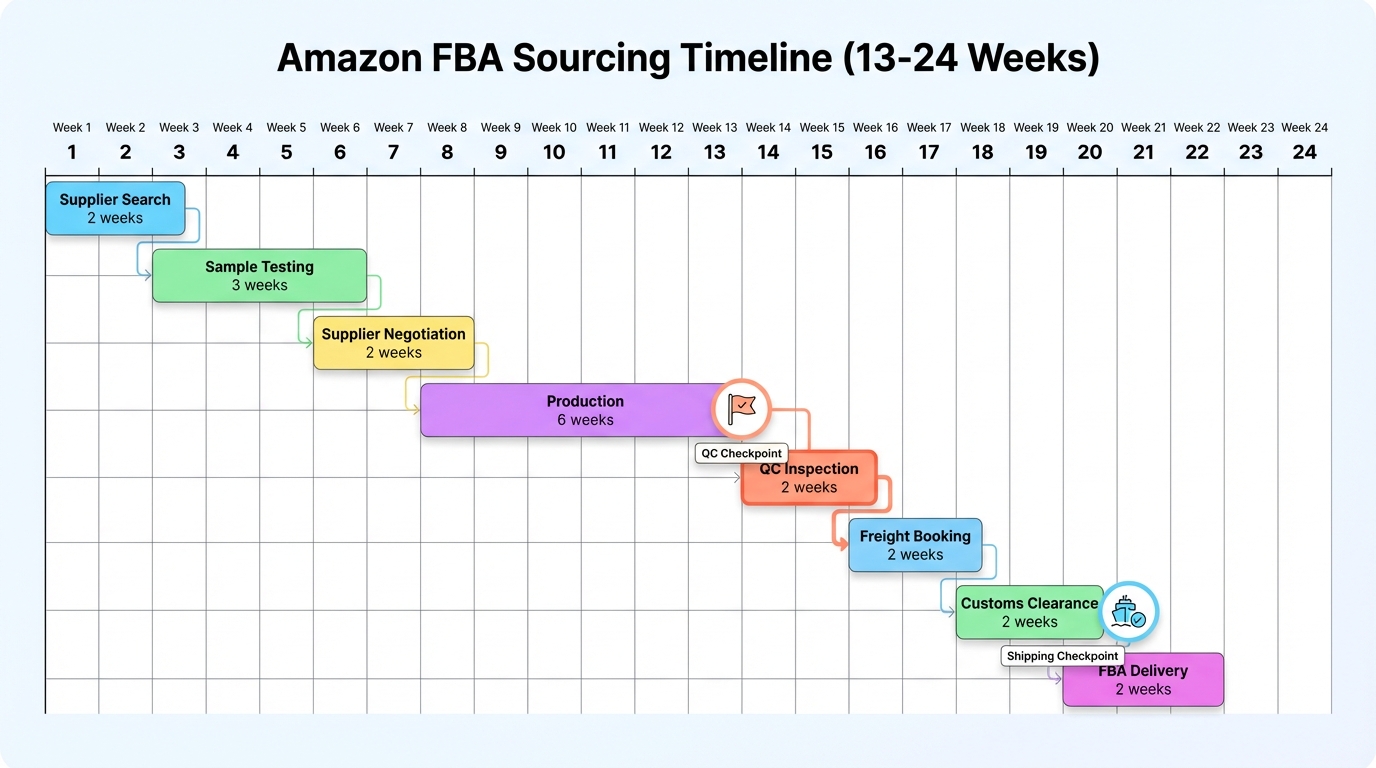
  • Longer Lead Times: Lead time is the time from placing your order to the arrival of the goods at their destination. When sourcing overseas, especially from China, lead times can be significant. You need to account for production time and shipping time. For example, production might take 30 days and ocean shipping another 30-40 days, plus time for customs clearance and trucking to the Amazon warehouse. If you opt for faster air shipping, you'll cut down transit time but at a higher cost. In contrast, sourcing from a local or closer-to-home supplier might mean you can get products produced and delivered in a couple of weeks. Long lead times affect how you manage inventory. You have to plan further ahead to avoid running out of stock. This can tie up more capital in en route inventory. Many new sellers start with the cheapest shipping to save money, but later realize that speed is also important for the business. As you grow, you'll find a balance between cost and speed (sometimes paying more for faster shipping to avoid stockout). Just be prepared that working with China typically requires more patience and foresight in inventory planning.
  • Language Barrier and Time Zone Difference: We listed communication as a pro in some ways, but it can also be a challenge. Misunderstandings can happen due to language differences. You might explain a product requirement, only to find the supplier interpreted it differently. Similarly, you might not fully grasp something the supplier is trying to tell you. This can be frustrating at first. Additionally, working across time zones means emails or messages often have a lag (when it's daytime in North America, it's nighttime in China, and vice versa). Sometimes you'll find yourself staying up late or waking up early to have a real-time chat with your supplier. The first few times, these hurdles may test your patience. However, you will get better at it with experience. Many sellers overcome language issues by using simple English, bullet-pointed requirements, and lots of pictures or diagrams to show exactly what they mean. The time zone issue becomes routine as you get used to the cadence (for instance, sending an email at night and expecting a reply by the next morning). The key is to stay patient, be clear in your communications, and double-check that both you and the supplier understand each other. Over time, as the working relationship strengthens, these issues diminish.
  • Potential Quality Variance and Need for Oversight: When you produce goods far away, you rely on the supplier to ensure things are done correctly. There's always a risk that the batch produced isn't as perfect as the sample or that some units have defects. With overseas sourcing, you must be proactive in quality control (as discussed in the sourcing process). In some cases, sellers might experience suppliers cutting corners to save costs, especially when instructions are not crystal clear. This isn't to single out China. It can happen with any manufacturer, but it's a reminder that strong oversight is needed when you can't be physically present. Building a good relationship and having inspections can mitigate this risk.

Conclusion for sourcing location: Despite the cons, China remains the go-to for most Amazon sellers. Start by considering China for most private-label products due to lower costs and greater flexibility. If your product category has a strong reason to explore elsewhere (e.g., handmade crafts from India, or if you want a "Made in USA" label for marketing), do your research and maybe request quotes from those countries as well. But remember to weigh the total picture: sometimes a slightly higher unit cost from a closer supplier is worth it if it drastically cuts shipping time, and sometimes not. The beauty is, you have options. SellerSprite's mission is to empower you with data and knowledge, so you can make the best decision for your business. No matter where you source, you now understand what factors to consider.

Should You Hire a Sourcing Agent?

As you venture into sourcing, you might hear about sourcing agents or sourcing services. A sourcing agent is essentially a middleman or facilitator who handles finding suppliers and coordinating orders on your behalf. This means that instead of you contacting factories and negotiating, the agent would handle it for you and deliver the results (often at a fee or commission).

If you're feeling overwhelmed or nervous about contacting suppliers yourself, the idea of hiring an expert to manage it can be appealing. However, there are important pros and cons to weigh. In this section, we'll discuss the advantages and disadvantages of using a sourcing agent versus managing the sourcing process on your own. Our goal is to help you make an informed decision that's best for your situation. (Spoiler: With the knowledge you're gaining from this course, we believe you can handle sourcing directly without needing an agent, but let's explore both sides.)

Pros of Using a Sourcing Agent

An image including 4 advantages of using a sourcing agent for Amazon sellers
  • Saves You Time and Effort: One of the biggest benefits of a sourcing agent is that they take on the heavy lifting of researching suppliers, making dozens of phone calls or emails, and comparing options. If you simply don't have the time to vet multiple suppliers or you find the process too time-consuming, an agent can step in and do those tasks for you. This can be especially useful if you plan to launch many products and would otherwise need to communicate regularly with many different factories. The agent essentially becomes your outsourcing partner for the sourcing workflow, freeing you to focus on other aspects of your business (such as marketing, branding, or product research).
  • Expertise, Experience, and Connections: Good sourcing agents come with industry knowledge and established networks. Since they have experience, they know where to look for specific types of products. For instance, in China, different regions are known for specializing in certain product categories (electronics in Shenzhen, textiles in Guangzhou, kitchenware in Yiwu, etc.). An experienced agent will know these nuances and might quickly pinpoint the right region or supplier for your particular product, which is something you'd have to learn over time. They are also more likely to spot red flags and avoid scams because they've seen many suppliers and know the common tricks. Moreover, agents often have a network of contacts, not just suppliers, but also freight forwarders, inspection companies, packaging suppliers, etc. This means if you need extra services (like custom packaging or combining goods from multiple factories), a knowledgeable agent can coordinate that through their connections. In some cases, a sourcing agent might even pool orders or have relationships that secure slightly better pricing from factories (though this isn't guaranteed; it's possible if they give a supplier frequent business).
  • Logistical Help (Bundling Samples, Inspections, etc.): Agents in the supplier's country can offer on-the-ground assistance that is hard for you to do remotely. One example is handling sample consolidation. If you contact five different suppliers for samples, you'd normally have to pay international shipping for each sample sent to you, which can get expensive (imagine a $30–50 shipping fee per sample). A sourcing agent could have all those samples sent to their local office in, say, China, then inspect them for you and mail you a single combined package with all samples, saving on shipping costs. Similarly, an agent can conduct factory visits or quality inspections on your behalf if needed, since they are local. They act as your on-the-ground representative, which can improve communication and trust with factories as well.
  • Negotiation and Cultural Insight: Doing business in a foreign country involves understanding business etiquette and culture. A local agent will naturally understand how to negotiate and communicate in the local language, potentially securing better terms. They might know how to navigate tricky conversations about pricing or quality in a way that maintains good relations. This can sometimes result in better pricing or more lenient terms (for example, an agent might persuade a factory to accept a lower MOQ or include an add-on service like custom packaging at little or no extra cost, thanks to their rapport with the supplier).

Cons of Using a Sourcing Agent

An image including 4 disadvantages of using a sourcing agent for Amazon sellers
  • Loss of Direct Control and Communication: When you insert an agent between you and the supplier, you are no longer in direct contact with the people making your product. This has several implications. First, you have to trust the agent to accurately convey your product requirements, concerns, and vision to the factory. Any miscommunication could get amplified by having an extra link in the chain. Also, if you suddenly need an update or a change, you have to go through the agent rather than speaking directly with the supplier, which can slow things down. In some cases, agents do not even reveal the identity of the actual manufacturer (to protect their business), which means you couldn't reach out to the factory even if you wanted to. You become dependent on the agent for all information. If the agent is unavailable (on vacation, sick, or dealing with other clients), you might experience delays in getting answers. Additionally, you miss out on building a relationship with your supplier. Many Chinese suppliers value having a good relationship with the end client; they often enjoy communicating with you, understanding your business, and even sending you holiday greetings. With an agent, you forgo that direct rapport.
  • Potentially Lower Priority from the Factory: Suppliers generally prioritize customers who are serious, communicative, and likely to place repeat orders. When you communicate personally, you can show the supplier that you're a professional business owner, which can make them value your orders highly. If all communication is handled by an agent, the supplier might view your business as just one of many. There isn't a personal connection to you as the brand owner. As a result, your order might not get the same level of attention or priority as a client who is directly engaged. For instance, if you urgently need to expedite production or resolve an issue, a supplier who knows you may go the extra mile to keep you satisfied. With an agent in between, the factory might be less motivated since their loyalty or relationship is primarily with the agent, not you. In short, you risk becoming a bit "invisible" to the supplier, which can backfire if you need special favors or fast communication.
  • Additional Cost (Agent Fees or Commissions): Sourcing agents don't work for free; they need to earn a living through fees or commissions. Typically, an agent might charge a percentage of your order value (for example, 5% of all orders placed through them) or a flat service fee. This extra cost will eat into your margins. If you're working with tight profit margins to begin with, a 5% commission can be significant. Moreover, if an agent's income is tied to a percentage of your order value, consider the incentive structure: The agent may have less motivation to negotiate the lowest price from the factory, because a higher price means a slightly higher commission for them. A trustworthy agent will still try to get you a good deal to keep you as a long-term client, but the inherent conflict of interest exists. There's also a possibility (in unfortunate cases) that an agent could mark up the factory price without you knowing, to increase their margin. Overall, using an agent may result in your product costing more than if you dealt directly with the supplier.
  • Dependency and Flexibility Issues: Once you rely on a particular agent, switching or stopping can be difficult. If the agent doesn't share supplier information and you decide to stop using them, you might have to start sourcing all over again to find a new factory. You also have to ensure the agent remains reliable. You are dependent on their work ethic and honesty. Most agents will do their best for you, but if you end up with one that is unresponsive or not transparent, it can be frustrating. Essentially, you are outsourcing a core part of your business, and that always carries some risk.

After weighing these points, you might wonder what the best course is. For most new Amazon sellers, we recommend sourcing products yourself, at least for the first few products. The experience you gain by directly handling sourcing is invaluable. It will teach you how to communicate with suppliers, what pitfalls to watch out for, and give you confidence. Thanks to the step-by-step guidance in this course (and tools like SellerSprite that support your product research and planning), you should be well-equipped to manage the process without needing an agent.

Of course, everyone's situation is different. If you truly don't have the time to handle sourcing, or if you're trying to launch many products simultaneously, a sourcing agent could be a useful solution. Just go into that relationship carefully: vet the agent's reputation, ensure you understand their fee structure, and try not to relinquish complete control (for example, insist on at least knowing factory's name or getting copies of important documents).

Among many successful sellers in our community, those who engage directly with suppliers often form stronger partnerships and gain better insights. Suppliers appreciate dealing with decision-makers. The negotiation, while it can be a bit outside your comfort zone at first, isn't as scary as it sounds. Suppliers are typically professional and used to working with entrepreneurs of all experience levels. And remember, you can always seek advice from the SellerSprite community if you need help drafting your messages to a supplier or negotiating a term. You're not alone in this; support is available.

Final Tips and Next Steps

Amazon FBA sourcing tips: stay organized, build supplier relationships, plan logistics.

Sourcing products can seem challenging, but it becomes much simpler with practice and the right support. Here are some final tips to keep in mind as you put this lesson into action:

  • Stay Organized: Keep records of all supplier communications, quotes, and agreements. Use spreadsheets or tools to track your sourcing progress. Being organized will help you compare options and avoid mistakes, such as ordering from the wrong supplier or forgetting key requirements.
  • Build Good Relationships: Whether you're dealing with a supplier in China or elsewhere, remember that there are people on the other end. Being courteous, responsive, and honest with your suppliers goes a long way. When you find a great supplier, treat them like a long-term partner. Good relationships can lead to better payment terms, faster responses, and even exclusive opportunities (like being offered a new product design before others).
  • Leverage SellerSprite Tools for Decision-Making: As you negotiate and plan your orders, don't forget the data-driven approach. For instance, use the Sales Estimator to gauge how many units you might sell in a month for your product's category. This can help you decide your initial order quantity. Use the Keyword Research tool to understand your product's demand cycle (if it's seasonal, you might adjust your timing or quantity). These tools ensure that your sourcing decisions align with market reality, so you don't over-order or under-order your inventory.
  • Plan for Logistics Early: If there's one aspect that often trips up new sellers, it's underestimating shipping and import logistics. As soon as you place an order with a supplier, start planning the shipping. Decide if you'll ship by air or sea, and line up a freight forwarder if needed. Be clear on who is handling customs (you or the supplier). We will cover logistics in depth later in future chapters, but it's never too early to get the ball rolling on shipping arrangements, given the lead times involved.
  • Don't Be Afraid to Ask for Help: Every seller was a beginner at some point and had questions about sourcing. If something is unclear, for example, maybe you're unsure about a clause in a supplier's contract, or you need advice on how to verify a supplier's legitimacy, reach out for help. You can post your questions in the SellerSprite Discord or Facebook Group, where seasoned sellers and our team can offer guidance. There's a big community of Amazon sellers who have been in your shoes and are willing to share their experiences.

Finally, take a moment to appreciate how far you've come. You are on the verge of launching your own product. Sourcing is the stage where your idea turns into a physical reality. It's exciting and empowering to navigate this process. Yes, there will be learning moments and maybe a few hiccups, but with each step, you're building your skill set as an e-commerce entrepreneur.

In the next part of the course, we will dive deeper into shipping your product to Amazon and managing the supply chain efficiently. You'll learn about shipping methods, customs, and how to ensure your inventory arrives safely and on time at Amazon FBA warehouses. With a solid grasp of sourcing (from this chapter) and shipping (up next), you'll have the foundation to keep your business running smoothly.

Keep up the great work! You now have a comprehensive overview of product sourcing strategies. Use this knowledge confidently as you move forward. Remember, the SellerSprite team and community are here for you whenever you need support. Good luck with finding that perfect supplier and bringing your product to life. We can't wait to see you succeed!

Ready to Source with Confidence?

Avoid scams and find reliable suppliers using SellerSprite's data-driven tools. Join us and source products confidently as you build your FBA business.

Try SellerSprite for Free → 

Continue Your Learning Journey

Visit the Course Directory to view all available chapters of the SellerSprite Amazon Seller Beginner to Master Course and jump to the section you need.

Open Course Directory → 

User Comments
Avatar
  • Add photo
log-in
All Comments(0) / My Comments
Hottest / Latest

Content is loading. Please wait

Latest Article
Tags