TL;DR: Amazon controls over 37% of US e-commerce sales, but market share varies widely by category. This guide teaches sellers how to analyze Amazon's retail dominance, assess competition, and use data-driven tools to grow their business.
Key Takeaways
- Amazon holds approximately 37.8% of the US e-commerce market, making it the dominant online retailer.
- Market share varies significantly by category: Amazon dominates electronics (over 50%) but has less control in apparel and groceries.
- Sellers can use tools like SellerSprite to analyze ASIN-level competition, track category trends, and identify growth opportunities.
Table of Contents
Note on marketplaces: This guide is specifically optimized for the US market.
Why Amazon Market Share Matters for Sellers
Understanding Amazon market share isn't just for investors or analysts. It's critical for sellers at every stage. Whether you're a new seller testing your first product or a brand scaling across multiple categories, knowing how much of the pie Amazon controls and where your niche fits can determine your success.
Market share analysis helps you answer key questions: Is your category dominated by Amazon Basics and first-party sellers? Are third-party sellers thriving, or is competition too intense? Most importantly: Are you growing relative to the market, or slowly losing ground?
In this guide, we'll walk through a step-by-step framework for conducting Amazon market share analysis, using real data and tools that sellers can apply immediately. For a deeper dive into analytics strategies, see our Amazon Seller Analytics Guide.
Step 1: Understand Amazon's Overall US E-Commerce Dominance
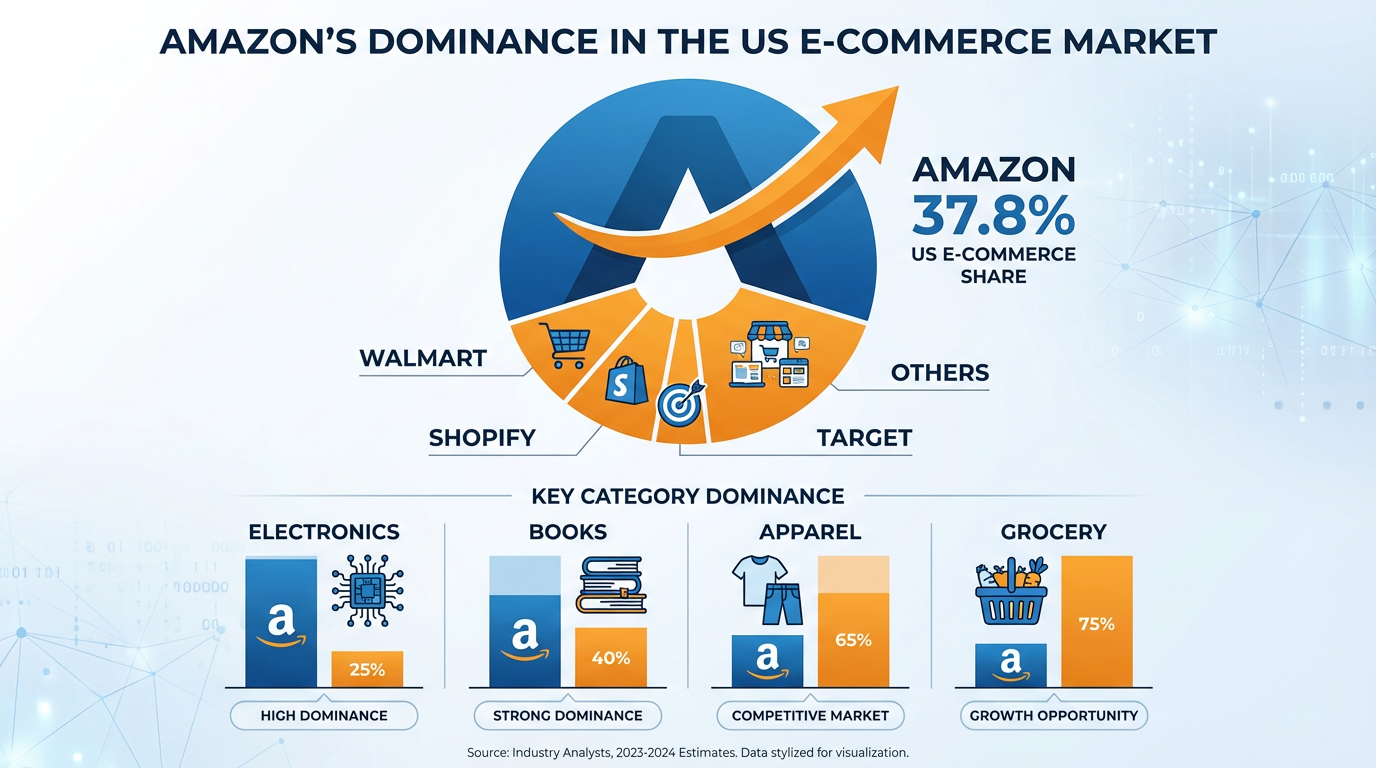
Amazon is the largest online retailer in the United States, but its exact market share fluctuates year to year. According to recent data from eMarketer and Statista, Amazon accounted for 37.8% of all US e-commerce sales in 2023, up from 36.5% in 2021. That means nearly two out of every five online dollars spent in the US goes through Amazon.
This dominance gives Amazon immense pricing power, logistics advantages, and customer trust. For sellers, this presents both opportunity and risk:
- Opportunity: Access to a massive, ready-to-buy audience.
- Risk: Heavy reliance on a single platform with changing fees, policies, and competition.
To stay competitive, sellers must benchmark their growth against Amazon's overall trajectory. If your sales are up 10% but the category grew 25%, you're actually losing relative market share.
Step 2: Break Down Market Share by Product Category
Amazon doesn't dominate every category equally. A one-size-fits-all assumption can lead to poor product selection and misguided strategies. Here's how Amazon's market share varies across key categories:
- Electronics: Over 50%, Amazon dominates due to Prime shipping, reviews, and brand trust.
- Books: ~45%, still a stronghold, though independent bookstores and direct publishers are gaining.
- Home & Kitchen: ~38%, highly competitive with many third-party sellers.
- Apparel: ~20%, lower due to fit concerns and strong competition from brands like Shein, Nike, and department stores.
- Grocery: ~12%, growing via Amazon Fresh and Whole Foods, but still limited by logistics.
For sellers, this means category selection is strategic. Entering a high-share category like electronics means competing with Amazon's private labels and top sellers. Low-share categories may offer whitespace but require more customer education and marketing spend.
Use tools like SellerSprite's Market & Product Analysis to compare category saturation, average sales volume, and pricing trends before launching.
Step 3: Analyze Seller Competition Within Your Niche
Even within a category, competition varies by sub-niche and price point. Amazon seller competition analysis involves evaluating:
- Number of active sellers per ASIN
- Buy Box ownership (especially by Amazon itself)
- Average seller ratings and review counts
- Pricing trends and discount frequency
- Private label vs. branded product mix
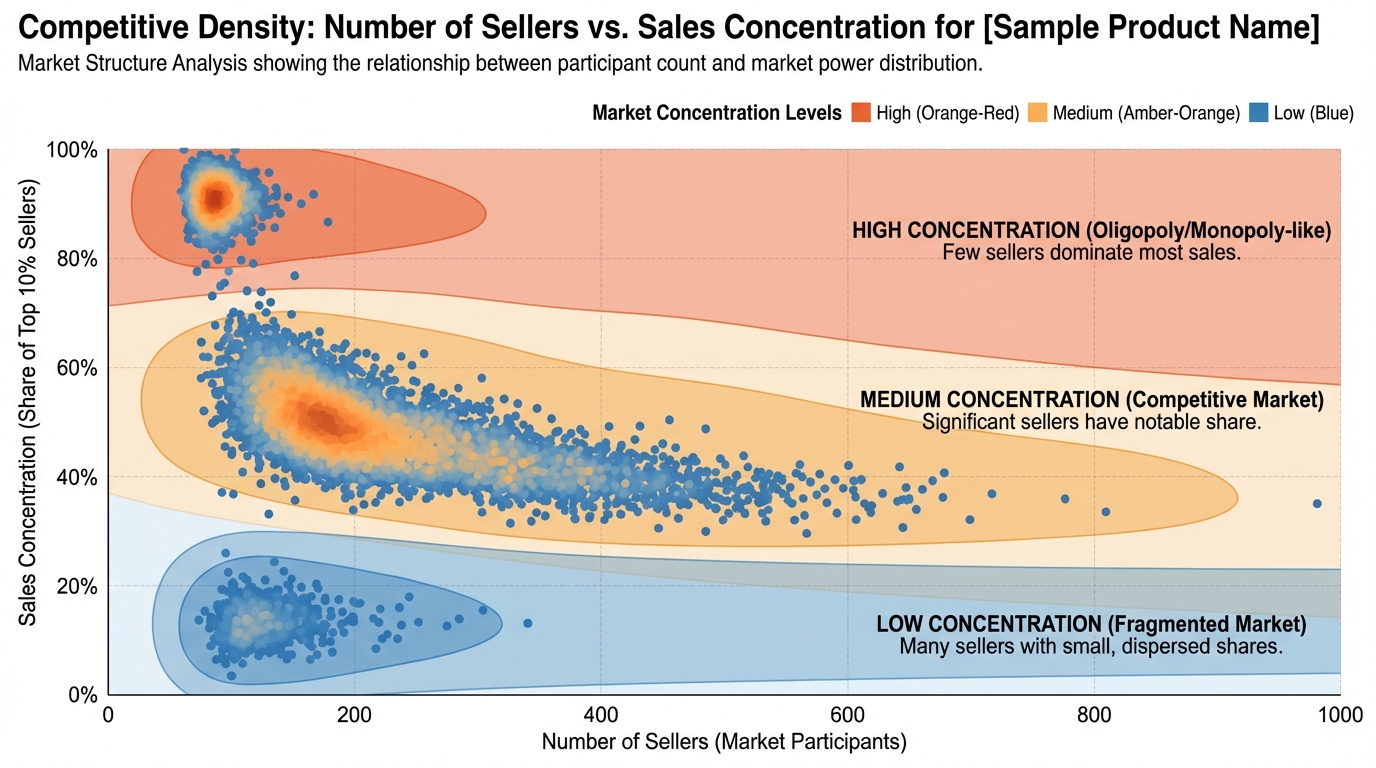
For example, a popular kitchen gadget might have 50+ sellers, but if 80% of sales come from three top performers, the market is highly concentrated. Conversely, a fragmented market with many small sellers may indicate opportunity, but also higher marketing costs.
Tools like SellerSprite's Market Research Module allow you to visualize competition heatmaps, track new entrants, and identify under-served niches. This is especially useful for growth-stage sellers looking to scale profitably.
Step 4: Use Data Tools to Track Real-Time Market Shifts
Amazon's marketplace is dynamic. A product with low competition today could attract dozens of new sellers tomorrow. That's why ongoing market share monitoring is essential.
Effective Amazon marketplace insights include:
- Daily tracking of Best Seller Rank (BSR) movements
- Monitoring new FBA entrants in your category
- Identifying seasonal demand shifts
- Reverse-engineering successful listings (see our Reverse ASIN Strategy Guide)
Platforms like SellerSprite provide real-time dashboards that aggregate sales estimates, competitor pricing, and inventory levels. This allows sellers to make proactive decisions, like adjusting prices, launching promotions, or pivoting to new products, before losing ground.
FAQ
What percentage of e-commerce sales does Amazon control in the US?
As of 2023, Amazon controls approximately 37.8% of all US e-commerce sales, according to eMarketer. This makes it the largest online retailer in the country, ahead of Walmart, Shopify, and Target.
How does Amazon's market share vary across different product categories?
Amazon's market share varies significantly by category. It dominates electronics (over 50%) and books (~45%), holds moderate share in home & kitchen (~38%), but has lower penetration in apparel (~20%) and grocery (~12%). This variation affects competition levels and seller strategy.
What tools can Amazon sellers use to analyze market share and competition?
Sellers can use data platforms like SellerSprite to analyze market share and competition. These tools provide insights into category sales volume, competitor pricing, new entrants, and ASIN-level performance. Features like reverse ASIN lookup and market saturation scores help sellers make informed decisions.
Next Steps
- Sign up for SellerSprite to access real-time market share and competition data.
- Run a category analysis on your top product using the Market & Product Analysis Tool.
References
- eMarketer US E-Commerce Market Share Report 2023
- Statista: Amazon Share of US E-Commerce Sales
- SellerSprite Blog: Amazon Seller Analytics Guide View
By SellerSprite Team
The SellerSprite Team combines deep expertise in Amazon marketplace analytics, data science, and e-commerce growth strategies. With years of experience helping thousands of sellers, from beginners to enterprise brands, we deliver actionable insights grounded in real-world performance data. Our mission is to empower sellers with transparent, accurate, and timely intelligence to win on Amazon.