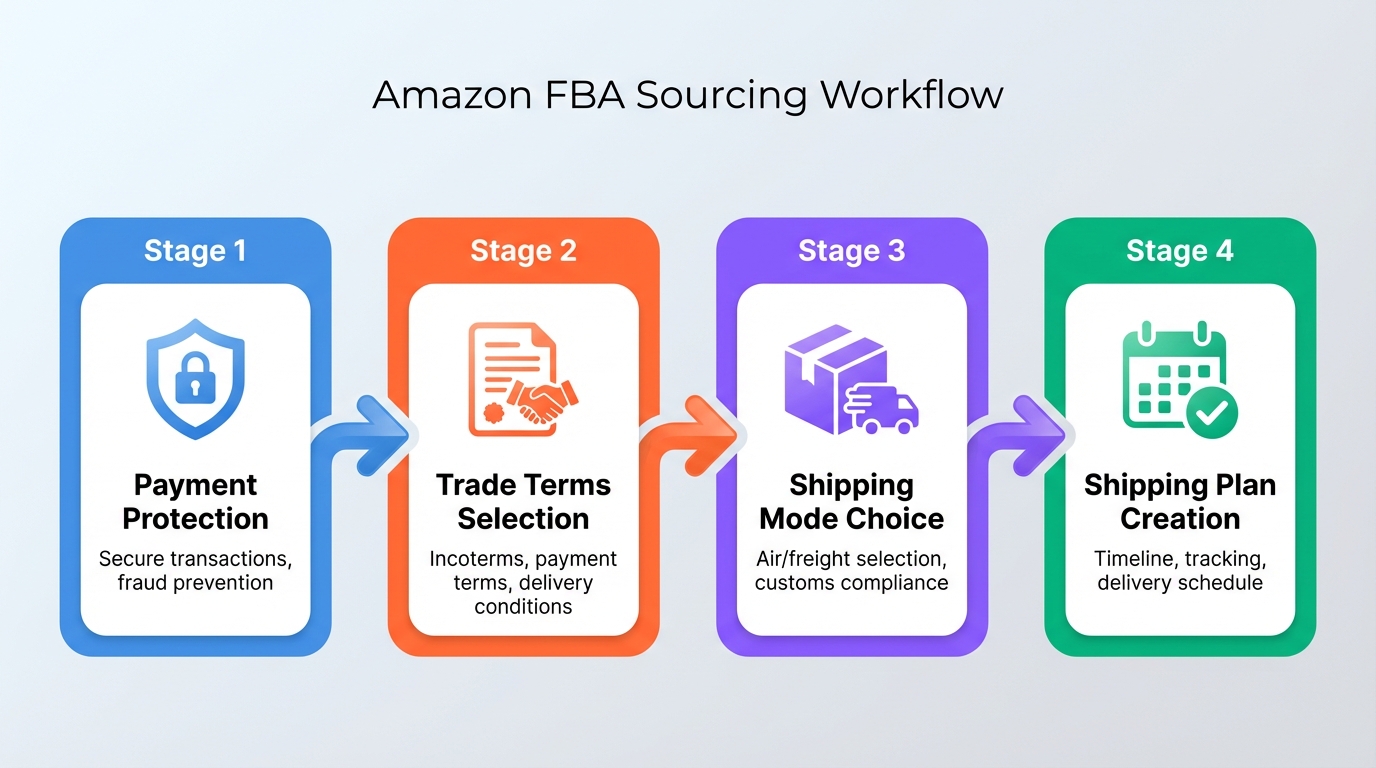
In Amazon FBA, your biggest sourcing risks often show up in two places: paying suppliers and getting inventory into Amazon on time.
Building on these risks, this chapter guides you through a simple, repeatable workflow to protect payments, define document production requirements, select the best shipping terms, and create an Amazon shipping plan, ensuring you move from risk awareness to reliable execution.
If you only remember one thing
Protect your cash first, then protect your timeline. Use a purchase order agreement to lock in specs and timelines, use protected payment methods, and choose shipping terms that align with Amazon's delivery realities.
Key takeaways
- Use a purchase order agreement to confirm specs, inspection, timelines, shipping terms, and payment milestones before paying. Opt for payment methods and shipping terms that align with Amazon delivery.
- Avoid wire transfers to suppliers without protection. Always use payment methods that allow disputes if necessary.
- Choose trade terms deliberately. DDP is simplest for Amazon delivery, while DAP may risk failed receiving if fees are due at delivery.
- Split shipments when appropriate: send a small, faster air shipment to quickly launch and test sales, then follow with remaining units by sea to save on costs once demand is validated.
- Create the Amazon shipping plan carefully: carton counts must match, measurements must use the right units, and labels must be consistent.
- Forecast demand and reorder timing with SellerSprite to avoid panic shipping or overstocking by basing shipping choices on data.
Table of Contents
- Background and definitions
- Step 1: Create a purchase order agreement before you pay
- Step 2: Protect yourself when paying suppliers
- Step 3: Choose the right trade terms for Amazon delivery
- Step 4: Pick air vs sea shipping and a split strategy
- Step 5: Do you need a freight forwarder
- Step 6: Bonds, duties, tariffs, and customs delays
- Step 7: Create your Amazon shipping plan
- Comparison and decision guide
- Copyable templates
- FAQs
- About the author
- References
Background and definitions
A smooth Amazon launch is a chain of events. If one link breaks, your listing can go out of stock, your costs can spike, and your timeline can slip.
This chapter focuses on three practical definitions: trade terms (who is responsible for each shipping leg), shipping modes (air v.s. sea), and shipping plan setup (how Amazon receives your cartons and labels).
SellerSprite tip: Use Seller Tools for demand forecasting and smarter reorder timing, letting data, not urgency, guide your shipping decisions.
Step 1: Create a purchase order agreement before you pay
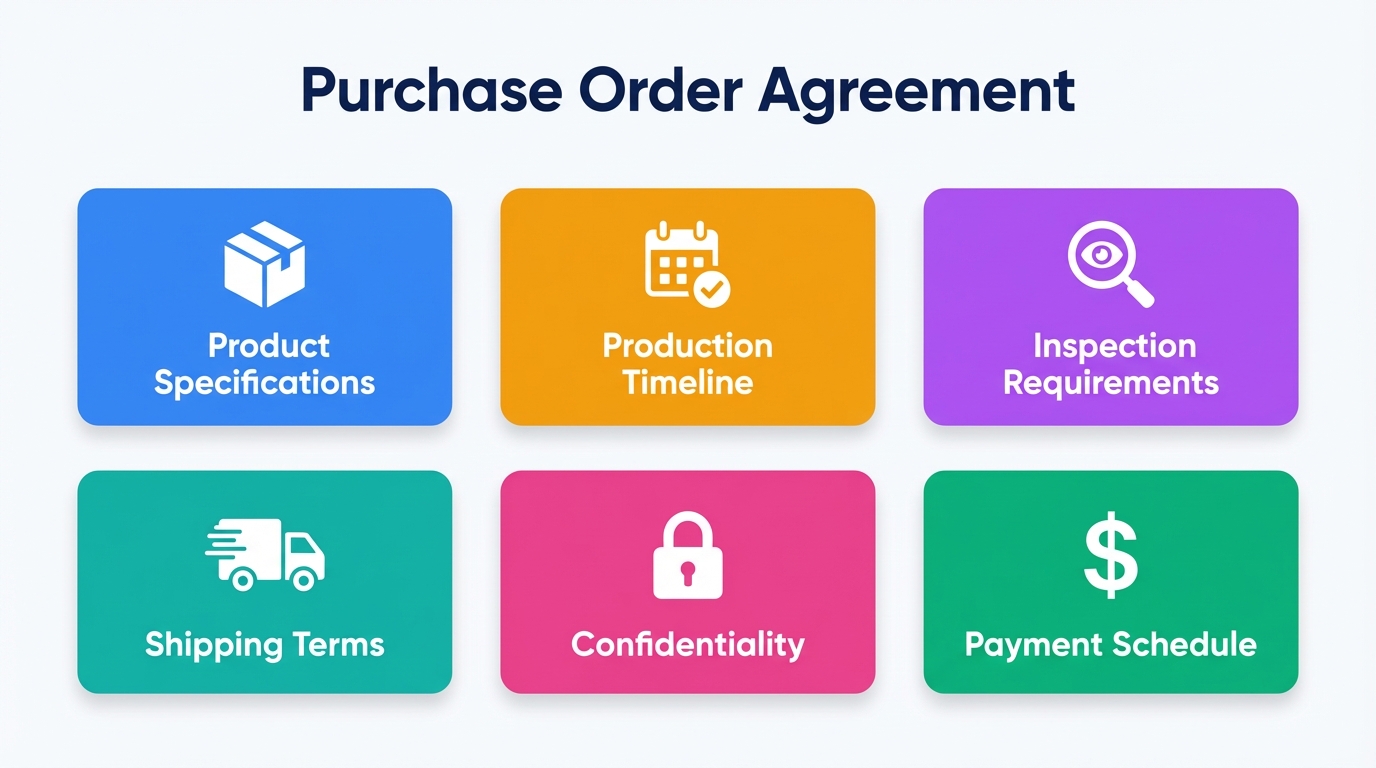
The purchase order agreement is your clarity tool. It documents product specs, timelines, inspection rights, shipping terms, confidentiality, and payment milestones in one place.
What to include
- Production details: materials, dimensions, colors, bundle contents, packaging, and labels.
- Timeline: agreed production days, notice requirement for delays, and a discount rule if delays exceed your threshold.
- Inspection: third-party inspection rights and required photos or videos during production and packing.
- Shipping: delivery address rules, tracking requirement, carton label rules, and trade terms.
- Confidentiality: no reuse of your images or designs, no sharing of pricing or product details with other buyers.
- Payment: deposit percentage, balance trigger, and the protected payment method you require.
Important: If a supplier refuses basic clarity on specs, inspection, and payment protection, treat it as a risk signal and pause before sending money.
Step 2: Protect yourself when paying suppliers
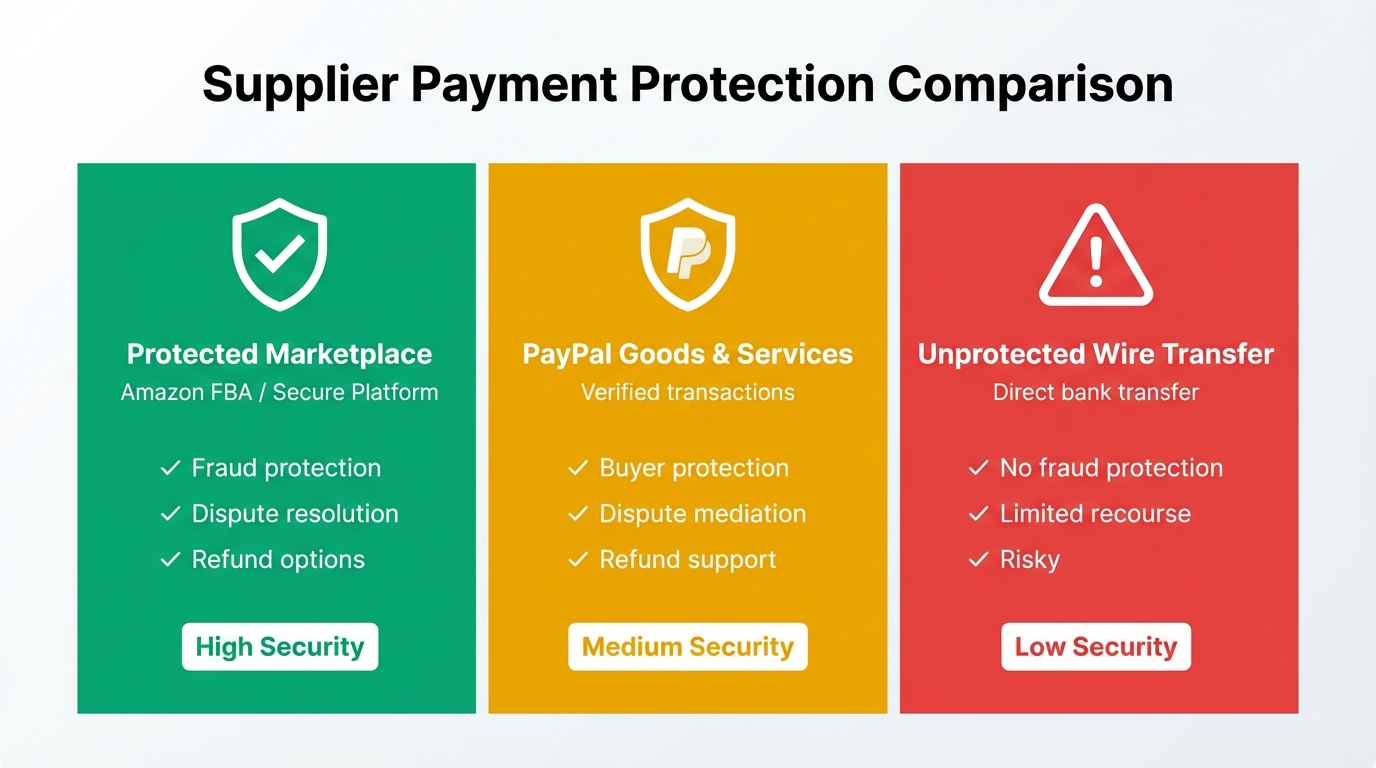
The goal is simple: keep dispute options. Avoid payment methods that leave you with no leverage if quality fails, timelines slip, or terms change.
Recommended payment structure
- Deposit: Pay 30 percent to start production. Do not pay 100 percent upfront.
- Milestone photos: Require production photos or short videos as work progresses.
- Inspection: Schedule third-party inspection for first orders and high-risk products.
- Balance: Pay the remaining balance after the inspection passes and the final packing proof is provided.
Common payment mistakes to avoid
- Unprotected wire transfer directly to a supplier account.
- Paying 100 percent before production is complete.
- Skipping inspection on a first order, then discovering defects after the shipment lands.
Step 3: Choose the right trade terms for Amazon delivery
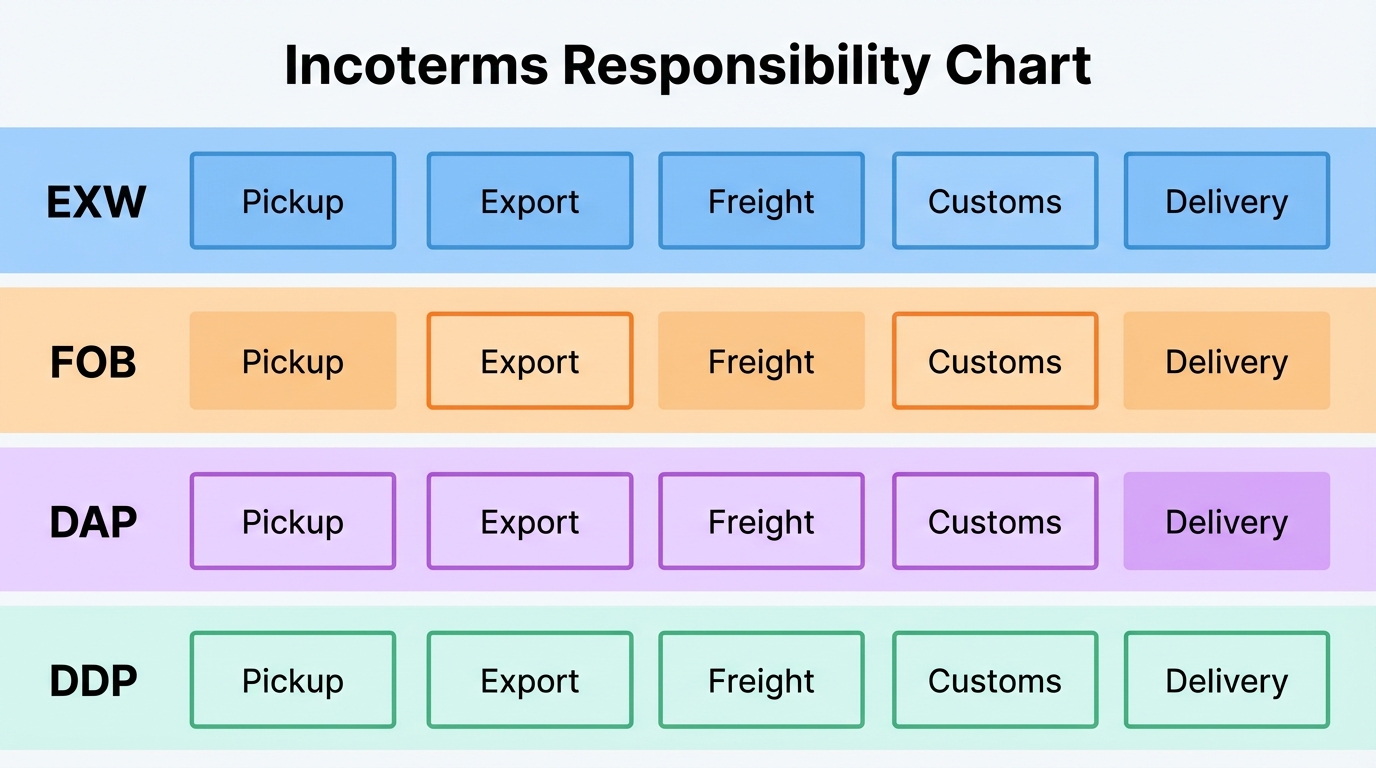
Trade terms define who handles each shipping leg and who pays duties and import fees. Choosing the wrong term can cause delays or failed deliveries at Amazon warehouses.
Quick definitions
- EXW: You are responsible from the factory door onward.
- FOB: Supplier handles delivery to the export port; you handle the rest.
- DAP: Delivered to your place, but duties are not paid. This can fail at Amazon receiving if fees are collected on delivery.
- DDP: Delivered duties paid. Most stress-free for Amazon warehouse delivery.
Recommendation: If you are shipping directly to Amazon FBA, DDP is usually the safest choice because it avoids surprise delivery fees.
Step 4: Pick air v.s. sea shipping and a split strategy
Air is faster and more expensive. Sea is slower and cheaper. A split strategy can balance speed, cash flow, and storage costs.
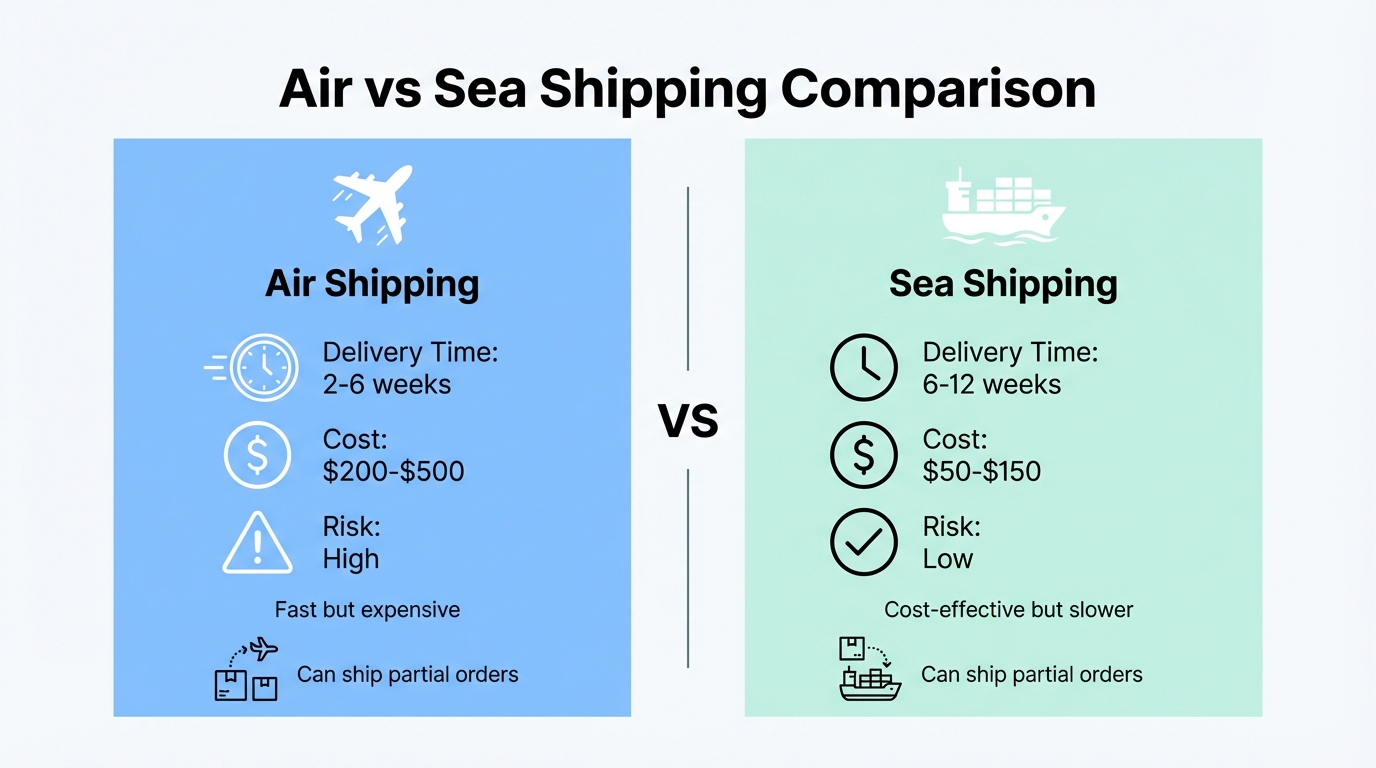
A simple strategy that works well
- First batch by air: Get initial inventory live quickly to validate sales velocity.
- Second batch by sea: Refill inventory at a lower cost once you see demand.
- Adjust with data: Use SellerSprite for demand and seasonality insights to refine reorder timing and quantities.
Risk notes
- If your air batch sells out faster than expected, you may go out of stock while the sea inventory is still in transit.
- Long transit times increase exposure to port delays and damage risk.
Step 5: Do you need a freight forwarder
Freight forwarders coordinate transport, customs paperwork, and delivery. They can reduce mistakes, especially as shipment size grows.
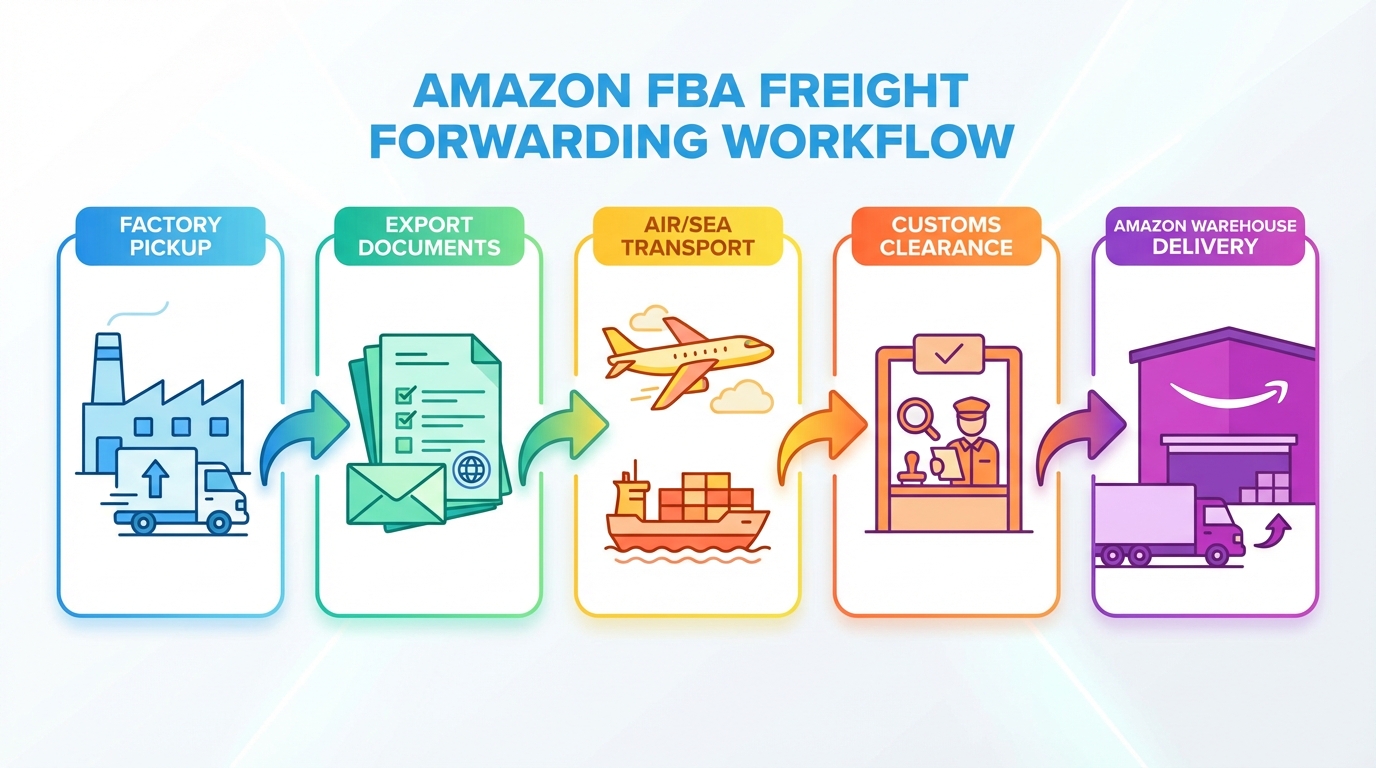
Rule of thumb
- For larger shipments, forwarders can be worth it because their fixed service fee spreads across more units.
- For smaller shipments, express carriers can be simpler, but confirm duty handling and delivery terms.
Step 6: Bonds, duties, tariffs, and customs delays
Import costs can change your unit economics. Duties and tariffs depend on your product classification, and customs inspections can add time.
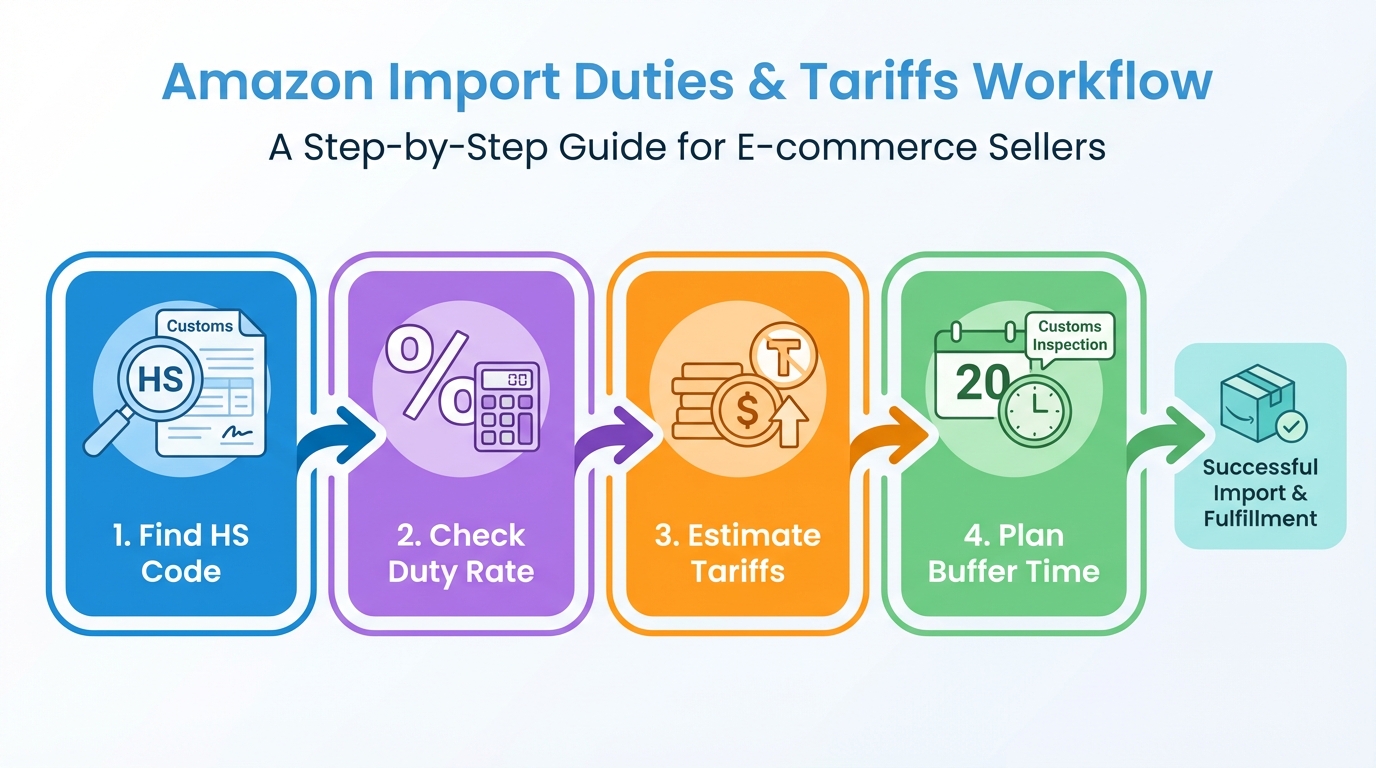
What to do before you ship
- Ask your supplier for the HS code or product classification used for export.
- Estimate your duty rate and include it in your landed cost calculation.
- Add a timeline buffer for possible customs inspection, especially for higher-risk categories.
- Keep documentation consistent across the invoice, packing list, and shipping labels.
Step 7: Create your Amazon shipping plan
Your shipping plan tells Amazon what is coming, how it is packed, and where cartons should go. A small data mismatch can cause delays in receiving.
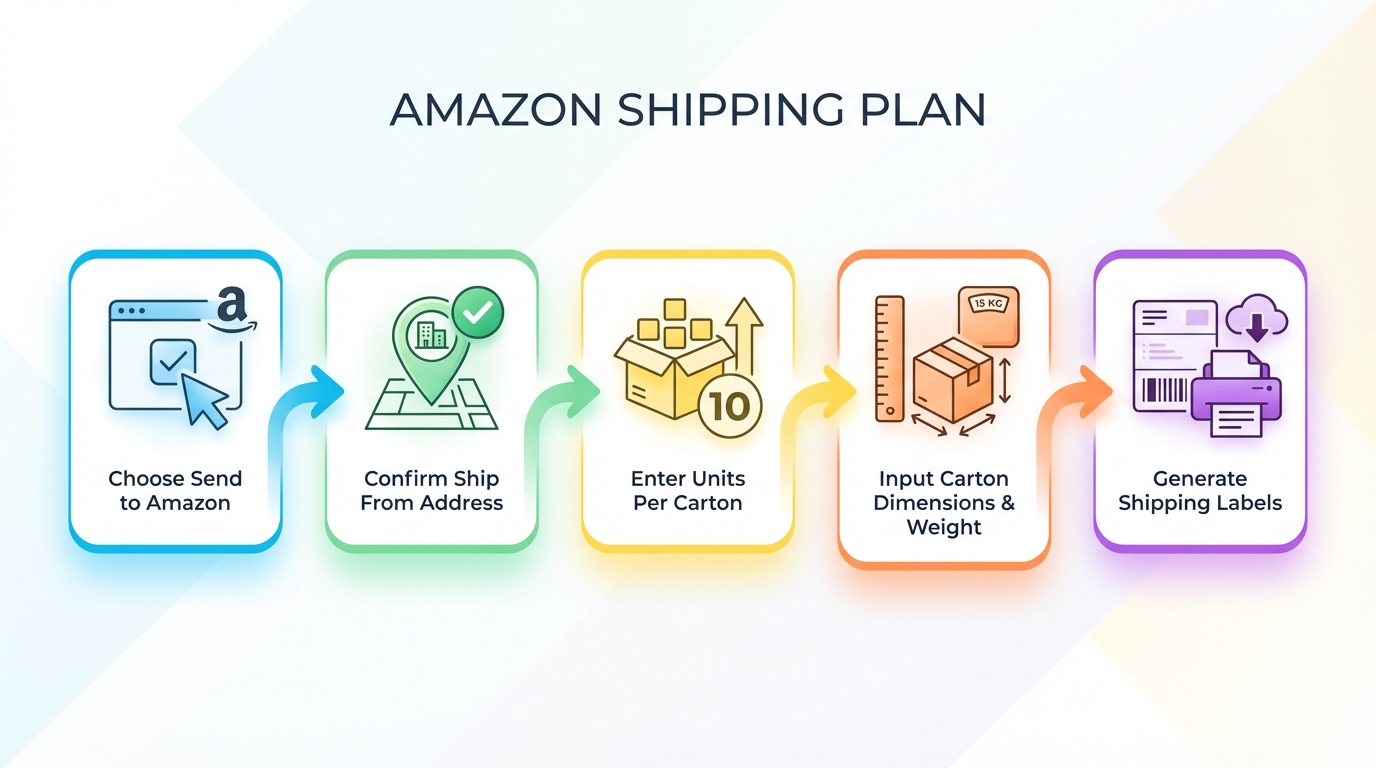
Step-by-step checklist
- Open Seller Central, go to Inventory, then start a shipment using Send to Amazon.
- Enter the ship from address. Use your supplier address unless you have a compelling reason to do otherwise.
- Choose case packed if each carton contains the same SKU.
- Enter units per carton and number of cartons. Make sure every carton has the same unit count.
- Enter the carton weight and dimensions in the units Amazon requests.
- Confirm who preps and labels. In most cases, you or your supplier handles labels to reduce costs.
- Download shipping labels and send them to your supplier for carton labeling.
Common receiving issue: If carton quantities are inconsistent, Amazon can pause receiving while they investigate. Keep units per carton identical across the shipment.
Comparison and decision guide
Copyable templates
Copy and edit this template for your next order. Keep it simple and make it easy for the supplier to confirm.
PURCHASE ORDER AGREEMENT TEMPLATE
1) Parties
[Your company name], First Party, enters this purchasing agreement with [Supplier company name], Second Party.
2) Production
Product name: [Product name]
Total units: [X]
Bundle contents: [List items if applicable]
Materials and specs: [Dimensions, color, key requirements]
Packaging: [Bag or box type, inserts, protection]
Labels: [UPC or FNSKU rules, suffocation warning if needed]
Units per carton: [X]
Total cartons: [X]
Unit price: [US$X]
Total price: [US$X]
Agreed production time: [X days after deposit confirmation]
Delay notice requirement: Notify First Party at least 3 days before expected delay
Delay discount rule: [Example: 5 percent discount per 3 days beyond agreed timeline]
3) Inspection
First Party reserves the right to third-party inspection before shipment.
Second Party agrees to provide:
a) Photos during production
b) Photos of first packed carton from each side with carton open
c) Photos of full shipment with all cartons visible
d) Final packing list confirmation
4) Shipping
Trade term: [DDP recommended for FBA]
Delivery destination: [Amazon address or TBD within destination country]
Tracking: Second Party provides tracking as soon as available
Carton labels must include: Product name, carton quantity, made in origin, gross weight, carton dimensions
5) Confidentiality
Second Party will not share designs, pricing, photos, or product information with other buyers.
Second Party will not reuse images on marketplace listings or marketing pages.
6) Payment Deposit: 30 percent of production total paid via protected method
Balance: 70 percent paid after inspection pass and packing confirmation
Processing fees: [Specify who covers fees]
7) Approvals
Signed on [Date]
First Party signature: ___________________
Second Party signature and company stamp: ___________________
FAQs
Q: What trade term is safest for shipping to Amazon FBA?
A: DDP is typically the safest for direct FBA delivery because duties and fees are handled before delivery, reducing the chance of failed receiving due to payment collection.
Q: How much should I pay as a deposit to a supplier?
A: A common structure is a 30 percent deposit and 70 percent after inspection passes and packing confirmation. Avoid paying 100 percent upfront.
Q: Why do sellers split shipments?
A: Splitting lets you launch faster with a smaller air batch and reduce costs with a larger sea batch. It can also reduce storage costs by avoiding oversupplying Amazon too early.
Q: What is the most common shipping plan mistake?
A: Inconsistent carton quantities or incorrect carton measurements. Keep the units per carton identical and convert the weight and dimensions to the units Amazon requires.
Share Your Sourcing Journey With SellerSprite Community
Join the SellerSprite community on the Facebook Group to share your sourcing journey, ask questions, and get support from fellow Amazon sellers.
View The SellerSprite Course Directory
Ready for the next step. Open the SellerSprite Academy course directory to continue building your Amazon FBA skills chapter by chapter.
About the author
SellerSprite Academy Team creates practical lessons for Amazon sellers focused on repeatable execution. Our writers combine seller experience, workflow design, and data-driven research to help you ship with confidence and reduce costly sourcing mistakes.
Need help applying this chapter? Ask in our Discord or Facebook Group and include your product category, target launch date, and shipment size so the community can give practical feedback.
References
- Amazon Seller Central: Send to Amazon (shipping plan workflow)
- Amazon Seller Central: Box content information and shipment details
- International Chamber of Commerce: Incoterms overview (EXW, FOB, DAP, DDP)
- USITC: Harmonized Tariff Schedule search (duty rate lookup)
- PayPal: Buyer Protection policy (eligible purchases)
- Alibaba: Trade Assurance buyer protection overview